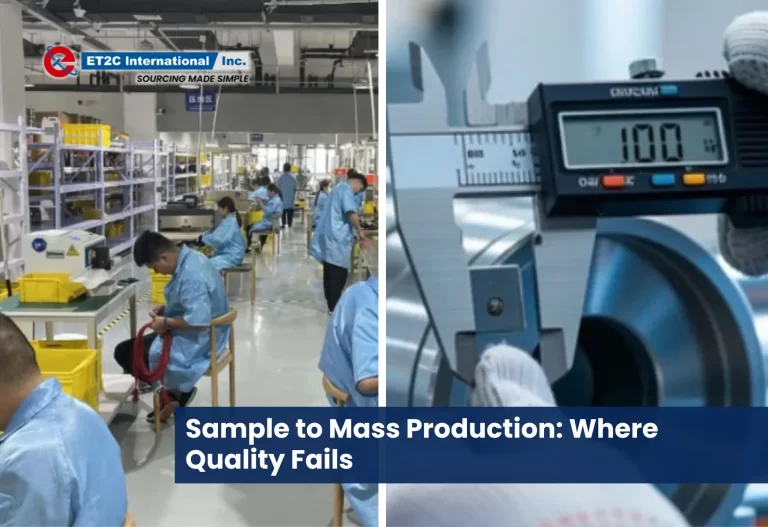
From Sample Approval to Mass Production: Where Quality Failures Happen
The approved sample on your desk proves a factory can make one good unit under ideal conditions. It says almost nothing about whether they can make ten thousand of them consistently. The distance between that perfect sample and a full production run is exactly where most quality defects are introduced, and knowing precisely which stage each defect enters at is the difference between preventing failures and paying for them. So at what stage of production do most quality defects get introduced? There is no single universal figure, because it varies by product and industry, but the evidence consistently points upstream.
In ETQ’s 2024 Pulse of Quality in Manufacturing survey of more than 750 quality leaders, 61 percent said that up to half of product recalls can be attributed to supplier issues, which is why what enters the factory matters as much as what happens inside it. Other defects enter during production through specification drift, and some of the most damaging come from undisclosed subcontracting. That is why quality assurance that inspects only at pre-shipment catches defects too late to prevent them cheaply.
This is the discipline our teams run every day. ET2C International is a British-owned global sourcing company with over 25 years of experience and dedicated quality teams on the ground across China, India, Vietnam and Turkey. Our quality assurance and inspection teams run a structured, five-stage process that catches quality defects at the exact point they enter production, before they are built into an entire order. This article breaks that process down, stage by stage, with the defect data that explains why each checkpoint matters.
First, the Data: Defects Are Not Random
Effective quality assurance starts from a simple, data-backed truth: quality defects do not appear at random. They cluster at predictable points in the production process, and the cost of catching one rises sharply the later it is found. Industry inspection data consistently shows most defects trace back to a handful of stages, which means inspection effort should be concentrated where the data says defects actually enter. This is the entire logic behind the 1-10-100 rule, a principle we reference often.
If a defect costs 1 to prevent at the material stage, it costs around 10 to correct once it is built into production, and 100 to deal with once the faulty goods reach your customer, through returns, rejected batches, and lost trust. The economic case for upstream quality control is overwhelming: the earlier the stage, the lower the cost. As we explain in Quality Assurance vs Quality Control, QC catches defects that already exist, while QA prevents the conditions that create them.
Stage 1: Incoming Material Inspection
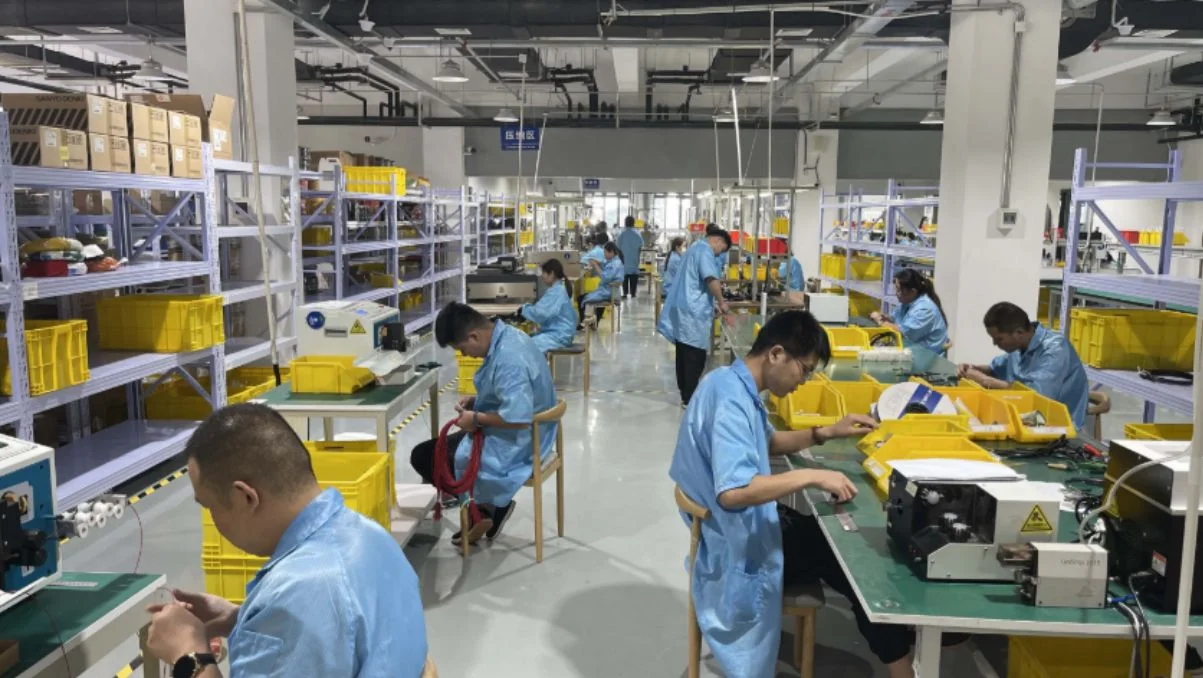
Before a single unit is assembled, raw materials and components set the ceiling on final quality. A significant share of quality defects originate here, as the supplier-related recall data above suggests: the wrong fabric weight, off-spec resin, a component quietly sourced from an unapproved sub-supplier. A defect designed into the material cannot be inspected out of the finished product, which makes incoming material inspection the single highest-return checkpoint in the process.
This is also the stage most remote buyers never see. In ET2C’s five-stage process, our quality control agents lay out and inspect raw materials against specification before production starts, as described in our overview of quality assurance at ET2C. Catching a material problem here costs pennies. Missing it means it multiplies through every unit that follows.
Why material substitution happens
Material substitution is rarely malicious. A supplier hits a cost squeeze, a preferred material goes out of stock, or a subcontractor sources independently. Without someone verifying materials on the ground, the first you know is when performance fails in the field. In-market quality control closes that blind spot before it opens.
Stage 2: First Article and During Production Inspection
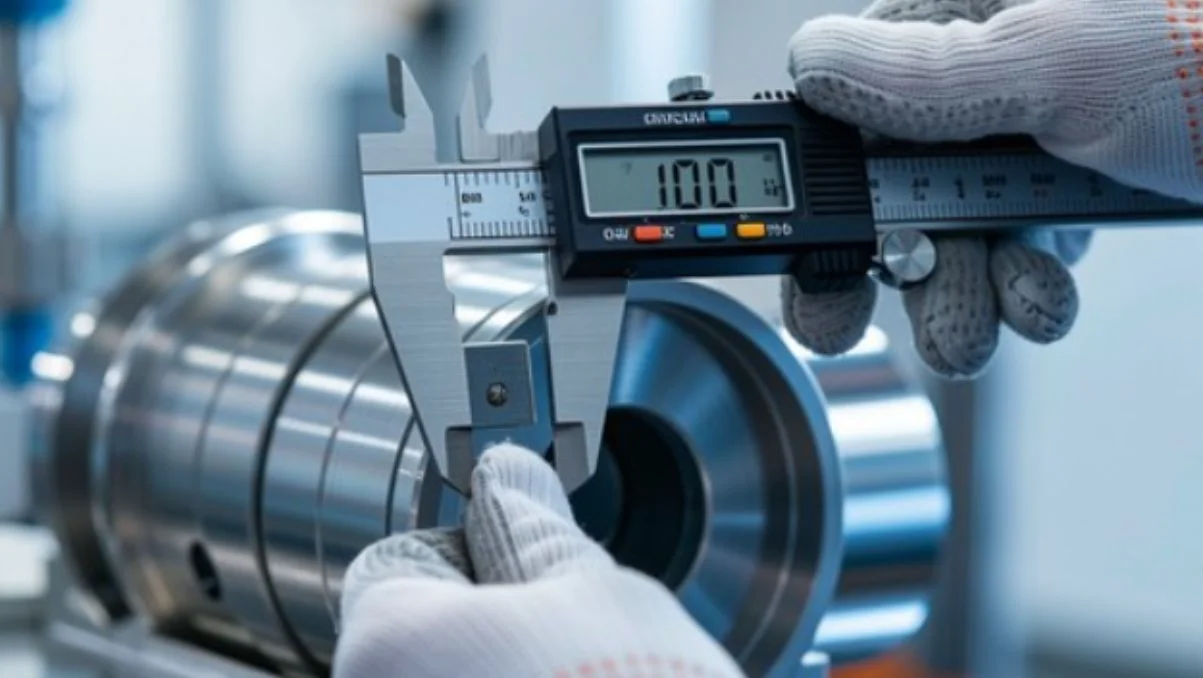
Once production begins, the first units off the line reveal whether the approved sample actually survives contact with the production line. This is where specification drift appears: the sample was hand-finished slowly, but the line runs at speed with different tolerances. It is one of the most common sources of mass production defects.
During Production Inspection, typically run when 20 to 30 percent of the order is complete, is the checkpoint that catches systemic problems while they are still fixable. If a defect pattern is emerging, catching it at 20 percent complete means correcting 20 percent of the order, not 100 percent. This single stage prevents more large-scale quality defects than any other, and it is central to how our buying office model protects clients on the ground.
Stage 3: Sub-Tier and Subcontractor Verification
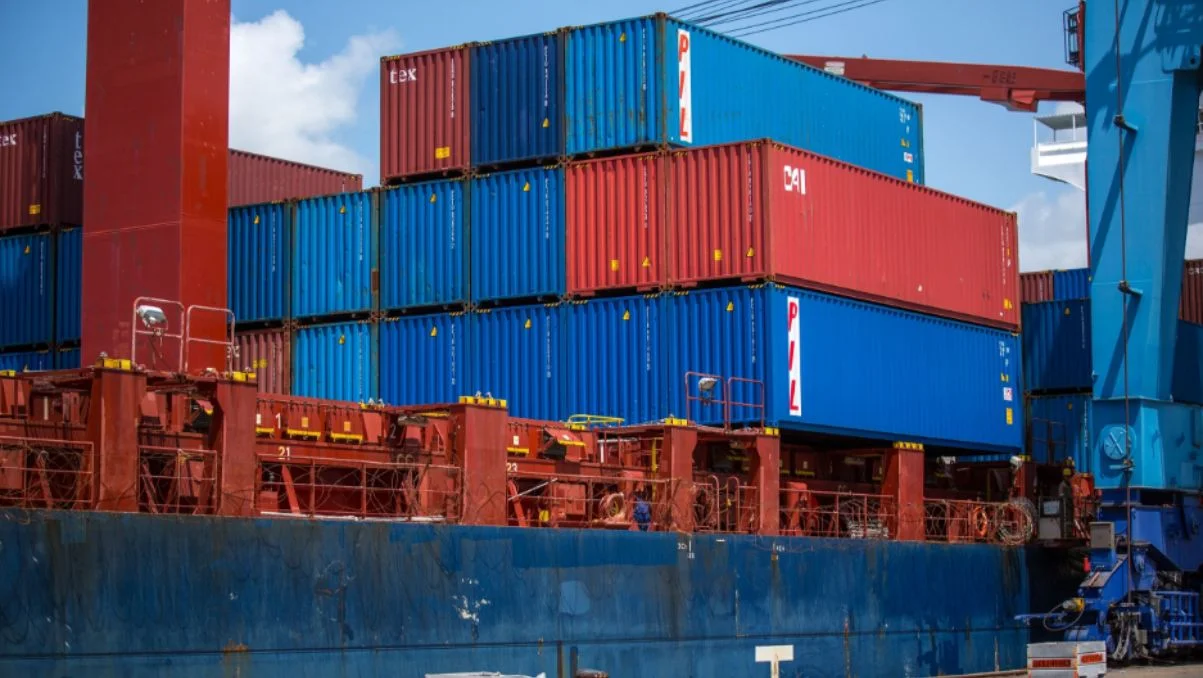
This is the stage most inspection regimes skip entirely, and the one where the most damaging quality defects hide. A factory that passes qualification and produces excellent samples may route part of a production run to an undisclosed subcontractor whose quality control standards are significantly lower. The units look identical on paper and fail in the field. ET2C’s in-market teams in China regularly identify production runs that have been partially or fully subcontracted to facilities that were never part of the original qualification. Tracing where your goods are actually made, tier by tier, is a core part of our factory audit and supplier compliance work, and it is impossible to do from a desk thousands of miles away.
Stage 4: Pre-Shipment Inspection and AQL
Pre-shipment inspection is conducted when 80 to 100 percent of goods are produced and packed. Using AQL acceptance sampling methodology, inspectors assess a statistically valid sample and classify quality defects as critical, major, or minor against agreed acceptance limits.
If the defect count exceeds the limit, the batch fails and is subject to 100 percent inspection, rework, or rejection. Here is the data-driven insight most buyers miss: if pre-shipment inspection is the only stage you inspect, you have left it dangerously late. By then, defects designed in at the material stage or missed during production are already built into the entire order. Strong quality assurance treats pre-shipment as confirmation, not discovery, as we set out in Quality Assurance vs Quality Control: The Hidden Margin Risk.
Stage 5: Corrective Action and Feedback
The final stage is what turns inspection into improvement. When a factory inspection identifies a defect or a batch fails AQL, ET2C briefs the client and implements an agreed corrective action plan: a wider statistical sample, products remade, or, where acceptable, the batch accepted with full transparency. How a supplier responds here reveals the future relationship more clearly than any audit score. Crucially, defect data captured at every stage is fed back to build a picture of where a specific supplier tends to fail. That is the difference between inspecting products and managing supplier quality over time, and it is why our quality assurance services focus on rapid reporting and genuine insight, not a completed checklist.
A Data-Driven Approach: Inspect Across Stages, Not Just at the End
Put the five stages together and the pattern is clear. Relying on a single pre-shipment inspection is like checking a patient only at the autopsy. A genuine quality assurance system inspects across the whole process, incoming materials, first article, during production, sub-tier, and pre-shipment, all aligned to ISO 9001 principles, with defect data captured at each stage. This is exactly what ET2C’s five-stage quality control process delivers. By catching quality defects at the stage they enter, we keep the 1 from ever becoming a 100, and we connect quality oversight into the wider sourcing process, from RFQ to first shipment, so quality is built in rather than inspected for.
Frequently Asked Questions
Summary: Stop Inspecting Too Late. Build Quality In From the Start
Quality defects are not random, and they do not wait for the final inspection to appear. They enter at the material stage, drift in as the line scales up, hide inside undisclosed subcontracting, and only become visible at pre-shipment, when they are most expensive to fix.
The 1-10-100 rule explains why timing matters so much: a defect that costs 1 to prevent at the material stage costs around 10 to correct in production and 100 once it reaches your customer. Inspecting at every stage, and then feeding the defect data back into the supplier relationship through corrective action, is what moves quality assurance from catching problems to preventing them, and that is what protects your margin, your brand and your customers’ trust.
ET2C International helps brands, retailers and wholesalers build quality in from the first stage, with 25 years of in-market quality control across China, India, Vietnam and Turkey. Explore our quality assurance services, take the Sourcing Stress Test to benchmark your quality risk, or contact our team directly to discuss your production today. ET2C International Global Sourcing, Quality & Compliance Contact Us

Anishi Gupta
Position: Digital Marketing Specialist
Anishi Gupta is a Digital Marketing Specialist focused on performance marketing, content strategy, and data-driven growth at ET2C LinkedIn or anishi.g@et2c.com.