China Plus One in Practice: A Step-by-Step Framework for Shifting Production Without Disrupting Supply
Most articles about China Plus One stop at the decision. They make the case for diversifying global sourcing strategies beyond a single country, weigh Vietnam against India against Turkey, and leave the reader convinced, but with no map for what happens next. That gap matters, because in our experience working with brands on both sides of this transition, execution is where China Plus One sourcing strategies succeed or fail. The businesses that get burned aren’t the ones that picked the “wrong” country. They’re the ones that treated a sourcing transition as a switch to flip rather than a process to run.
If you’ve already made the case internally for diversifying, or used a tool like our China plus one market selector to shortlist a market this blog will pick up where that decision leaves off. It’s a practical, phased framework for moving production to a new supplier without a stockout, a quality slip, or a dual-running period that quietly never ends.

Why China +1 transitions fail more often than strategies do
The risks of China Plus One are well documented, we’ve written about them in detail in China plus one strategy: Hidden risk of global sourcing Raw material dependencies that still route through China regardless of where final assembly happens. Business cultures and relationship norms that don’t transfer between markets. Infrastructure and logistics networks that took decades to mature in one location and don’t yet exist in another.
Almost all of the transitions that struggle, though, fail for a more mundane reason: they’re run as a hard cutover instead of a validated handover. A new factory is assumed to replicate existing quality from its first production run. Supplier qualification is compressed into weeks because a deadline is looming. Allocation moves from the old supplier to the new one in a single step, with no fallback if week one doesn’t go to plan.
None of that is a strategic failure. It’s an execution failure and it’s avoidable.
ET2C International global sourcing experts
ET2C are a British owned global sourcing company. For over 25 years we have been helping clients to make their sourcing simpler. Our 250 colleagues are based on the ground in key sourcing markets (China, India, Vietnam and Turkey) to give you deep market insight and execution capability.
To talk to one of our colleagues drop us a line at contact@et2cint.com
The sourcing framework: qualify vendors in parallel, don’t replace
The core idea underpinning everything below is simple: a new supplier is qualified alongside your existing one, at low volume, before any allocation shifts. Nothing is “replaced” until the new line has proven it can hold quality and delivery consistently. In practice, that means working through eight phases:
- Scope and risk-map the transition
- Specify for parity, not just for price
- Shortlist and qualify candidate suppliers on the ground
- Get comparable quotes, not just cheaper ones
- Pilot with samples and small-batch production
- Dual-run production and shift allocation in stages
- Hold quality control constant across both origins
- Plan logistics for a two-origin supply chain
Each phase is where a specific, well-known risk gets neutralised here’s how they work in practice.
- Scope and risk-map before you touch a supplier list
Before any outreach to new suppliers, decide what’s actually in scope: which SKUs or product lines are moving, what’s driving the change (tariff exposure, single-source concentration risk, a capacity ceiling at your existing factory), and what success looks like. Cost parity, reduced risk concentration, or additional capacity headroom are different goals that lead to different supplier shortlists.
This is also the point to check the raw material trap flagged in our hidden-costs piece: confirm whether the critical inputs for your product still route through China regardless of where final assembly happens. If they do, “diversifying” final assembly alone won’t remove as much risk as it appears to on paper.
- Specify for parity, not just price
A sourcing transition lives or dies on whether quotes from different countries are actually comparable. Translate your product requirements into specifications a new supplier base can quote against consistently. Tolerances, materials, and quality benchmarks referenced against a standard like ISO 9001, rather than a description that leaves room for interpretation.
Skipping this step is the single most common reason for the “the new factory’s quality just isn’t the same” complaint six months into a transition. It’s rarely a capability gap, it’s usually a specification gap.

- Shortlist and qualify candidate suppliers on the ground
Website reviews, certificates, and video calls will tell you what a supplier claims. They won’t reliably tell you what a supplier can actually deliver at your required volume and quality level. That gap is exactly why our sourcing and procurement process leans on factory audits and on-the-ground verification rather than remote vetting alone, capacity constraints and compliance gaps are far easier to spot in person than on paper.
This is also where the “culture vs. contract” point from the hidden-costs post becomes operational rather than theoretical: local relationships and an on-the-ground presence are what make supplier qualification reliable in a market you don’t yet know well.
- Get comparable quotes, not just cheaper ones
Once specifications are locked and candidates are qualified, structure quote requests so landed cost, not just unit price, is comparable across origins. Freight terms, customs clearance, and inland logistics infrastructure all affect the final cost, and they vary meaningfully between, say, a mature China logistics network and a newer supply base in Vietnam or India. A quote that looks cheaper on the factory floor can lose that advantage entirely by the time a container clears customs.
- Pilot before you commit: samples andsmall-batchruns
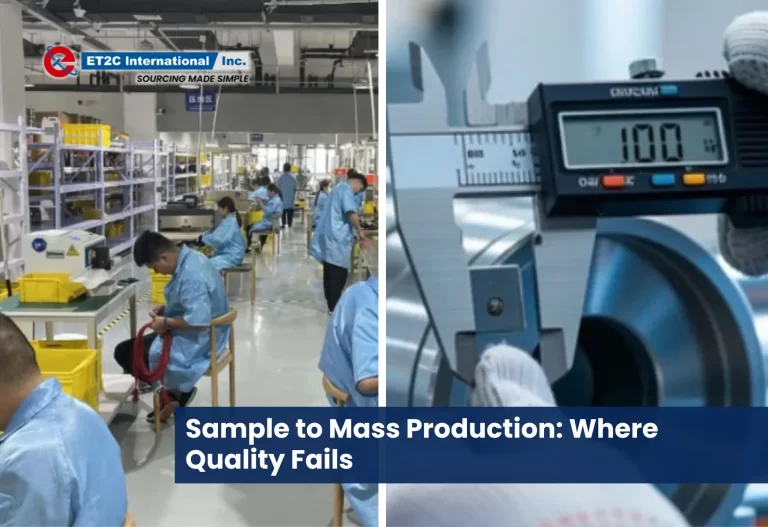
Every candidate that survives qualification and quoting should still go through a pilot before receiving real allocation: pre-production samples, a small first production run, and formal quality inspection data not a supplier’s own self-reported pass rate.
This is also the stage to set, in advance, the specific criteria under which you’d walk away from a candidate. Deciding that threshold before you’re emotionally invested in a supplier relationship is what keeps this step honest.
- Dual-run production and shift allocation in stages
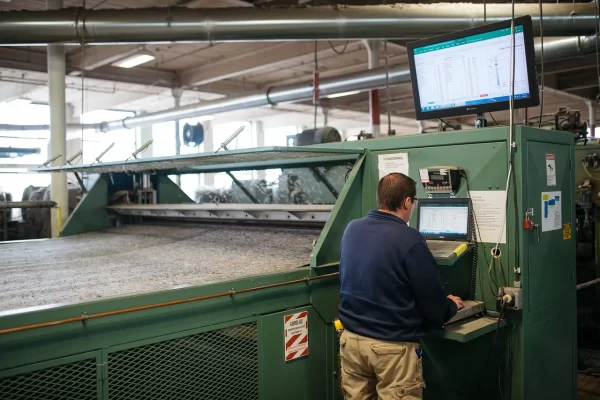
This is the mechanic that prevents disruption more than any other single decision: run both suppliers in parallel and shift allocation gradually, for example, 90/10, then 70/30, then 50/50 as the new supplier proves it can hold consistency, rather than cutting over in one step.
Each stage should run long enough to see a full production cycle, not just a single good batch, before moving to the next. And each stage needs a clear rollback trigger: if quality or delivery performance dips at any stage, allocation should be able to shift back toward the incumbent supplier without a scramble.
- Hold quality control constant across both origins
None of the above is verifiable without one inspection standard and one set of acceptance quality limits (AQL) applied identically in both countries. This is where third-party quality assurance earns its place in the framework it’s what makes consistent, comparable inspection possible across two countries without duplicating an internal QA headcount in each one.
- Planlogisticsfor a two-origin supply chain, not two separate ones
Whether the dual-sourcing arrangement is temporary (during a transition) or permanent (as an ongoing risk-mitigation strategy), it needs to be planned as one supply chain with two origins, not two independent ones. That means aligning freight terms (FOB, CIF, DDU, DDP) and lead times across both origins so downstream planning, inventory, replenishment, customer commitments, doesn’t have to run two different playbooks.
What this looks like in practice
We’ve worked with clients on exactly this kind of transition. In one case, an industrial equipment manufacturer came to us with a reactive approach to supply chain risk — no predictive visibility into supplier vulnerabilities, and disruptions that were only discovered after they’d already caused delays or quality failures. Rather than a single supplier swap, we built a proactive risk framework combining global risk data, supplier audits, and scenario planning, then used it to segment suppliers by risk level and guide a staged diversification away from the highest-concentration regions. The result was a supply chain leadership could see into in real time, with disruption-related costs and margin pressure both easing as concentration risk came down. You can read the full details in our case study on proactive supply chain risk management
Conclusion: the transition is the strategy
A good market choice, executed as a hard cutover, will underperform a good-enough market choice executed as a phased, validated transition. The country you diversify into matters less than most China Plus One content suggests how you move into it is what determines whether the transition reduces your risk or, for a while, adds to it.
If you’re planning a diversification move and want a second set of eyes on the transition plan, not just the market choice talk to our sourcing team about how we run this process for clients across Vietnam, India, Turkey, and China.
Frequently Asked Questions

David Young
Position: Group Marketing Director
David W. Young is a recognised thought leader in global sourcing and procurement, sharing expert insights on navigating inflation, managing overheads, and building resilient supply chains. He champions strategic solutions for maximising business value in a volatile world. LinkedIn or david.y@et2c.com.LinkedIn or david.y@et2c.com.