The ‘Mother of All Deals’: What the India-EU FTA Means for Global Sourcing, Manufacturing, and Supply Chains
May 2026: The India–EU FTA was concluded on 27 January 2026 at the India-EU Summit in New Delhi. Legal scrubbing and translation into all 24 official EU languages are now underway. EU Parliament ratification is expected in mid-2026. PM Modi is expected to sign the agreement in Brussels in mid-2026 formally. Full entry into force is targeted for early 2027. A Pilot Legal Gateway Office for skill mobility is being established. India–EU climate cooperation platform MOU is due for launch in the first half of 2026.
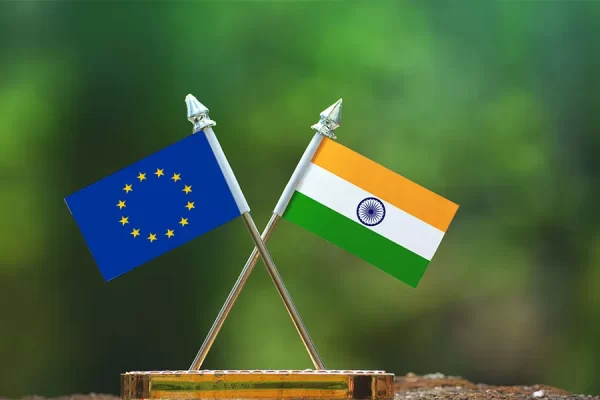
On 27 January 2026, India and the European Union concluded the India–EU Free Trade Agreement, the largest trade agreement either economy has ever signed. Together, they form a free trade zone of two billion people covering approximately 25% of global GDP and a combined market of USD 24 trillion. Both PM Narendra Modi and EU Commission President Ursula von der Leyen publicly described it as the ‘Mother of All Deals’. If your business operates in manufacturing, exports, supply chain management, or global sourcing, this agreement is already reshaping the environment you operate in. This guide covers the latest India–EU FTA updates, the sectors that benefit most, and the concrete steps businesses must take now.
For businesses navigating these opportunities, working with an experienced on-the-ground partner is critical. ET2C International operates across multiple key sourcing markets, including China, India, Vietnam, and Turkey, giving global businesses a single, connected partner to manage multi-market sourcing strategies with consistency, compliance, and commercial discipline. As the India–EU FTA reshapes global supply chains, having a partner with established buying office operations across the world’s most important manufacturing hubs is a decisive competitive advantage.
Key Numbers: The Scale of the India–EU Trade Relationship
| Annual EU–India goods and services trade | €180 billion |
| EU–India goods trade (2024) | €120 billion, 11.5% of India’s total trade |
| EU–India services trade (2024) | €59.8 billion |
| Indian exports to the EU (2024–25) | USD 75.85 billion |
| Indian exports are getting immediate duty elimination | 90.7% of tariff lines |
| Indian exports gaining zero duty (by value) | USD 33 billion previously taxed at 4–26% |
| EU goods exports to India are projected growth | Expected to double by 2032 |
| European companies currently in India | 6,000 companies |
| EU jobs supported by EU–India trade | 800,000 jobs |
| Services subsectors open to India (EU commitment) | 144 subsectors |
| Combined GDP of both economies | USD 24 trillion (25% of global GDP) |
Latest India–EU FTA Updates: What Is Happening Right Now (May 2026)
Legal Scrubbing and Translation Underway
Following the conclusion of India–EU FTA negotiations on 27 January 2026, the full FTA text was published in late February 2026. Legal review teams from both sides are now working through every clause in detail to ensure the agreement is legally watertight. This process is running in parallel with translation into all 24 official EU languages, a standard procedural requirement before formal signature.
EU Parliament Ratification Expected Mid-2026
Unlike some recent EU trade agreements, such as EU-Mercosur, the India–EU FTA has been structured entirely within the exclusive competence of EU institutions, the European Commission, the Council, and the European Parliament. This means no additional ratification by individual EU member state parliaments is required, significantly streamlining the process. EU Parliament consent is expected by mid-2026, with the formal signing likely when PM Modi visits Brussels mid-2026.
Entry into Force Targeted for Early 2027
Commerce Minister Piyush Goyal has stated India will seek to fast-track the deal. The India–EU FTA entry into force is targeted for early 2027. India’s ratification process is notably more straightforward than the EU’s, so the timeline is primarily driven by EU institutional procedures. Once in force, 90.7% of Indian exports will immediately receive duty elimination, with phased reductions covering the remainder over 5 to 10 years.
Pilot Legal Gateway Office for Skill Mobility
One of the most immediately actionable outcomes of the India–EU FTA is the establishment of a Pilot Legal Gateway Office in India to enhance skill mobility. This office will support the structured movement of Indian professionals to EU markets under the FTA’s professional mobility framework, which covers intra-corporate transferees, contractual service suppliers, and independent professionals. This is particularly significant for India’s IT services, healthcare, and engineering sectors.
India–EU Climate Action Platform MOU
A Memorandum of Understanding establishing an India–EU Platform for Cooperation and Support on Climate Action is due to be launched in the first half of 2026. This is a parallel commitment running alongside the FTA, addressing concerns from EU environmental stakeholders about the agreement’s trade and sustainable development chapter. The EU has also committed USD 590 million to help India reduce emissions in carbon-intensive export sectors affected by the Carbon Border Adjustment Mechanism (CBAM).
Security Information Agreement Negotiations Launched
At the January 2026 India–EU Summit, negotiations were launched for an India–EU Security of Information Agreement. A Memorandum of Understanding on professional mobility was also signed at the summit, alongside an administrative arrangement on electronic signatures and seals to facilitate trade payments. These companion agreements deepen the India–EU strategic partnership well beyond tariffs and trade.
India-Canada CEPA Also Launched
In March 2026, India and Canada formally launched CEPA negotiations, further expanding India’s trade agreement footprint. India has now concluded eight FTAs covering 37 developed economies. While the EU remains the centerpiece, this broader trade diversification strategy reinforces India’s position as a preferred global sourcing destination across multiple markets simultaneously.
How ET2C International Can Help: Turning India–EU FTA opportunities into real commercial results requires on-ground execution, sector expertise, and disciplined sourcing frameworks. ET2C International works with global buyers and global clients to build structured, scalable, and compliant sourcing operations across India, from identifying the right manufacturing partners to managing quality, governance, and operational consistency. ET2C provides a quick, risk-managed o00233n-ground presence designed to support scalable sourcing and long-term growth. Contact the team at contact@et2cint.com.
Why the India–EU FTA Is a Turning Point for Global Sourcing
Supply Chain Diversification and the China+1 Strategy
The structure of global sourcing has fundamentally shifted. Businesses no longer optimise solely for the lowest unit cost. Supply chain resilience, market diversification, and regulatory predictability have become equally important decision factors. Recent global disruptions exposed the fragility of over-concentration in any single manufacturing geography, accelerating China+1 sourcing strategies across virtually every industry. Kiel Institute research (January 2026) projects that under the India–EU FTA, Indian exports to the EU will surge by 41%, EU exports to India will rise by 65%, and Chinese exports to India will decline by 5 to 9%, a direct supply chain diversification outcome of strategic commercial significance for global buyers.
Geopolitical Context: US Tariff Pressure Accelerated the Deal
US tariffs on Indian goods reached as high as 50% in 2025, creating urgent pressure on Indian exporters to diversify away from over-reliance on American buyers. For the EU, similar tariff pressures reinforced the need to strengthen ties with India as a stable, large-scale partner. The India–EU FTA is partly a geopolitical response to this environment — anchoring both economies within a rules-based bilateral trade framework that reduces exposure to US trade policy volatility. Just days after the India–EU deal was concluded, the US and India also reached a framework agreement to lower US tariffs, demonstrating India’s strengthening global trade leverage.
What the India–EU FTA Actually Changes
Tariff Elimination Across Goods
The EU eliminates tariffs on approximately 97% of Indian goods exports. India is committed to market access on 92.1% of its tariff lines, covering 97.5% of EU exports by value. Critically, labour-intensive exports, textiles, apparel, leather, footwear, marine products, gems and jewellery, toys, and sports goods, currently facing EU duties of 4 to 26%, will enter the EU market at zero duty, unlocking an estimated USD 33 billion in Indian export value. Phased reductions for sensitive categories, including automobiles, wines, and spirits, protect domestic EU producers. Indian producers of dairy, cereals, poultry, and select agricultural products retain protection from EU import competition.
Services Market Access: 144 Subsectors for India
The India–EU FTA services commitments are among the deepest in any modern trade agreement. The EU has made binding commitments across 144 service subsectors, including IT/ITeS, digital services, professional services, education, and business services. India has committed to 102 EU service subsectors. These commitments ensure regulatory certainty and non-discriminatory treatment for Indian service providers operating across EU markets.
Digital Trade and Data Adequacy
The Digital Trade chapter of the India–EU FTA was agreed in principle during negotiations and creates a pathway for India toward EU data adequacy status. This status simplifies GDPR compliance for Indian IT and technology firms handling EU citizen data, removing one of the most persistent operational barriers for Indian digital services exports. Combined with the 144-subsector services commitment, this positions India’s USD 250+ billion IT services industry for significant EU market expansion.
Professional Mobility Framework
The FTA establishes a structured professional mobility framework covering intra-corporate transferees, contractual service suppliers, and independent professionals, plus provisions for dependents, students, and future social security arrangements. This is directly supported by the Pilot Legal Gateway Office being established in India to process and facilitate temporary EU work access for Indian professionals. Southern Indian states are expected to be a primary source of healthcare professionals and skilled IT workers accessing EU markets under this framework.
MSME-Friendly Rules of Origin
Rules of origin under the India–EU FTA are aligned with global value chains and allow self-certification through Statements of Origin. Exporters submit a statement on a digital portal, which customs authorities on the importing side can verify. This removes the administrative burden of traditional certificate-of-origin processes. Special flexibilities exist for MSME-dominated export sectors, including shrimps, prawns, and downstream aluminum products, ensuring that smaller businesses can access FTA tariff benefits without disproportionate compliance costs.
Intellectual Property Rights and Traditional Knowledge
The IPR framework within the India–EU FTA reaffirms TRIPS-compliant intellectual property protection while explicitly safeguarding India’s generic pharmaceutical industry, the world’s largest by volume. The Traditional Knowledge Digital Library receives formal recognition, protecting India’s heritage from patent misappropriation. This balanced approach gives Indian pharma exporters the certainty they need to expand EU market presence without compromising public health obligations.
Bottom line for sourcing teams: Around USD 33 billion worth of Indian exports previously facing EU tariffs of 4-26% will now enter at zero duty. India’s price competitiveness versus Bangladesh, Vietnam, and Pakistan in EU markets has fundamentally shifted.
Sector-by-Sector Analysis: Who Benefits from the India–EU FTA?
Textiles and Apparel: Biggest Winner
The textile and apparel sector is the largest immediate beneficiary of the India–EU FTA. Indian textile exporters previously faced EU tariffs of 9 to 12%, placing them at a structural price disadvantage against Bangladesh (LDC duty-free access) and Pakistan (GSP+ status covering 66% of tariff lines). The FTA grants India duty-free access to EU textile markets across effectively all tariff lines, surpassing both Bangladesh and Pakistan’s existing access levels. The EU is the world’s largest extra-EU textile and apparel importer, with imports of approximately USD 263.5 billion in 2024 (Eurostat). India’s vertically integrated manufacturing capacity, producing domestic cotton, yarn, and finished goods, means it can now compete on price, quality, and scale simultaneously. This reinforces India’s position as a global textile sourcing hub for long-term contract buyers.
IT Services and Digital Trade
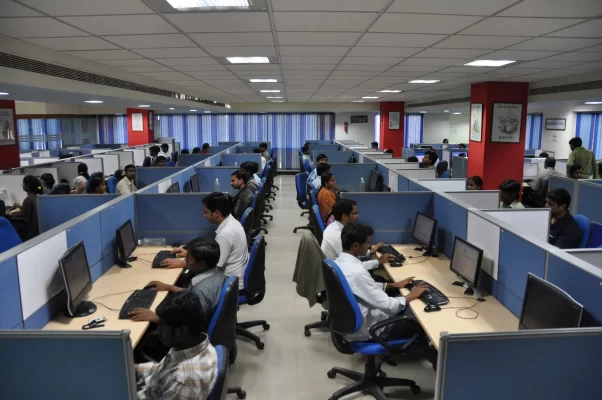
India ranked fifth globally in digitally delivered services exports in 2024. The India–EU FTA Digital Trade chapter, combined with the pathway toward EU data adequacy status, is a structural enabler for India’s technology sector. The 144 EU service subsectors open to Indian providers include IT/ITeS, software development, cloud services, and digital consultancy. With the Pilot Legal Gateway Office supporting professional mobility, Indian IT firms can now place personnel in EU markets more efficiently. This is expected to accelerate India–EU digital trade from its current base significantly beyond the €59.8 billion services trade figure recorded in 2024.
Pharmaceuticals and Medical Devices
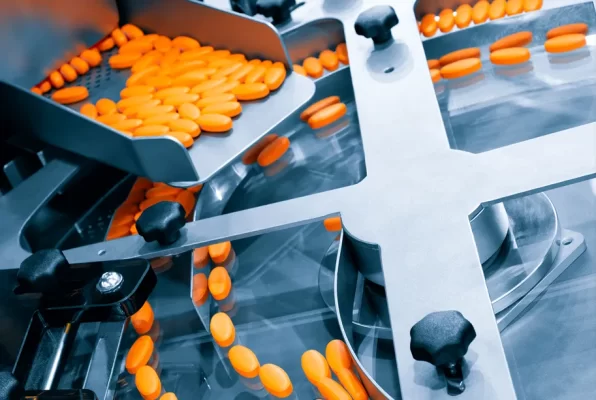
India is the world’s largest producer of generic medicines by volume. Current Indian pharma exports to the EU stand at approximately USD 2.95 billion, just 2.2% of total EU pharmaceutical imports, signalling enormous room for growth. Tariff elimination combined with streamlined regulatory procedures and mutual recognition agreement pathways will significantly expand Indian pharmaceutical and medical device sales in Europe. The FTA’s explicit protection for India’s generic pharmaceutical industry under the IPR chapter removes a key concern that stalled earlier negotiations.

Agriculture and Food Processing
The India–EU FTA’s agricultural provisions provide preferential EU market access for Indian exports of garments, tea, spices, marine products, and leather, covering all preferential tariff lines. Duty-free or near-zero-duty access for processed foods, grains, spices, fruits, and value-added agri-products opens new revenue channels for exporters while strengthening farm-linked supply chains in rural India. The agreement is expected to boost farmer incomes, promote value-added agri-exports, and strengthen rural and women-led livelihoods in agricultural communities.
Chemicals
India is already a net exporter of chemicals to the EU. With exports of approximately ₹8.9 billion in 2024 against imports of ₹7.7 billion, the India–EU FTA reinforces this trade surplus by removing remaining barriers across specialty chemicals, agrochemicals, and petrochemicals. The EU has identified India as a key partner for reducing over-concentration risks in chemical supply chains, making this sector a strategic priority within the broader supply chain diversification agenda.
Furniture, Home Products, and Lifestyle Goods
With duty-free EU market access, Indian manufacturers of wooden furniture, metal furniture, home accessories, and lifestyle decor can now compete effectively in one of the world’s highest-value consumer markets. India’s combination of cost-efficient production, skilled craftsmanship, and scalable manufacturing capacity in furniture clusters makes this sector a strong opportunity for global sourcing teams building home and lifestyle category supply chains.
Gems, Jewellery, Leather, and Footwear
These sectors, previously facing EU tariffs of up to 26%, now gain zero-duty access to EU markets. Labour-intensive and regionally distributed across India, these industries directly support the MSME ecosystem and generate significant rural employment. The India–EU FTA MSME-friendly rules of origin, with self-certification provisions, ensure smaller manufacturers can access tariff benefits without excessive compliance burdens. For global sourcing clients, India becomes a more commercially compelling partner for design-driven, value-focused manufacturing.
Green Technology and Renewable Energy
A less-discussed but strategically significant dimension of the India–EU FTA is its treatment of green goods and clean technology. The agreement reduces tariffs on green goods and liberalises services sectors relevant to the energy transition. Combined with India’s expanding renewable energy capacity and the India–EU climate action MOU, this creates a framework for India–EU green supply chain partnerships in solar, wind, and clean manufacturing sectors, attracting major European investment interest.
Practical Steps: What Businesses Must Do Now
The India–EU FTA rewards early movers. With entry into force targeted for early 2027, the window to prepare is open now:
- Audit your HS code tariff schedule positions against the FTA tariff annexes published in late February 2026. Confirm which product lines receive immediate duty elimination and which follow a phased schedule.
- Rules of Origin readiness: Ensure your products meet India’s origin requirements under the FTA’s self-certification framework. Upload-ready Statement of Origin documentation should be prepared in advance of entry into force.
- CBAM assessment: If you operate in steel, aluminium, fertilisers, cement, or chemicals, conduct a Carbon Border Adjustment Mechanism cost analysis. Carbon costs must be factored into pricing models alongside tariff savings.
- GDPR and data compliance: IT and digital services exporters should align data handling practices with EU standards now, ahead of India’s expected data adequacy status, to avoid compliance delays when EU service market access opens.
- IPR registration: Register trademarks, patents, and designs in relevant EU markets ahead of the FTA’s entry into force. The agreement’s strong IPR chapter makes formal registration a commercial and legal priority for exporters in pharma, fashion, and technology.
- Identify and contract strategic sourcing or manufacturing partners in India. Relationships built in 2026 will carry structural price and compliance advantages when zero-duty access activates in 2027.
- Explore the Pilot Legal Gateway Office for professional mobility. IT firms, healthcare providers, and professional services businesses should monitor this initiative for early access to EU temporary work frameworks.
Impact on India’s Domestic Market and Manufacturing Competitiveness
The India–EU FTA is not exclusively an export story. Reduced duties on imported EU goods, particularly industrial machinery, precision engineering equipment, automotive components, and high-technology capital goods, will allow Indian manufacturers to upgrade production facilities toward Industry 4.0 standards at significantly lower cost. Major Indian conglomerates across manufacturing, green energy, and technology are expected to form joint ventures with European firms to produce for global markets, leveraging India’s cost-competitive manufacturing base combined with European technology and regulatory market access. For domestic consumers, increased competition and product availability will raise quality benchmarks over time, improving the broader market ecosystem.
India’s Strengthened Position in Global Trade
The India–EU FTA does not replace India’s existing trade relationships. It strengthens India’s role within the global trading system. India has now concluded eight FTAs covering 37 developed economies, with the EU positioned as the centrepiece. Ongoing negotiations with Canada, Israel, Chile, and the UK continue to expand this footprint.
Combined with recent agreements with Oman and New Zealand, India is executing a deliberate trade diversification strategy. This positions the country as a preferred global sourcing hub across manufacturing, services, agriculture, and digital trade simultaneously.
The India–EU FTA also offsets India’s exclusion from RCEP (Regional Comprehensive Economic Partnership). It provides preferential access to a market collectively as significant as the RCEP bloc for India’s export ambitions. This is not simply a free trade agreement. It is a long-term growth framework shaping the future of global trade and sourcing strategy.
Why This Truly Is the ‘Mother of All Deals
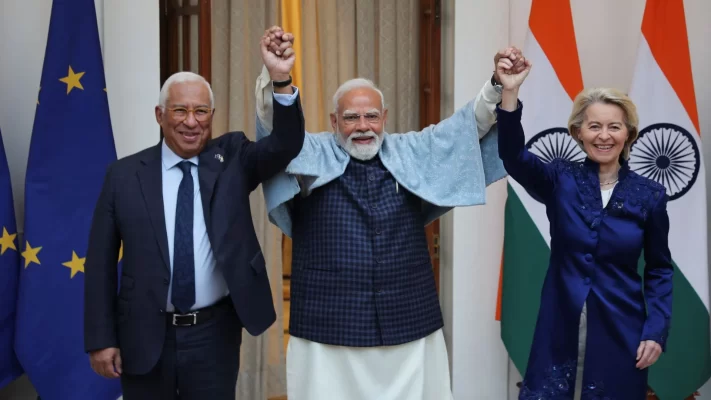
EU Commission President Ursula von der Leyen stated at the January 2026 summit: “We have delivered the mother of all deals. This is a tale of two giants, the world’s second and fourth-largest economies, which choose partnership in a true win-win fashion. We have created a free trade zone of two billion people.”
PM Modi called the agreement a “partnership for global good and a stabilising force in a fractured world.”
The agreement earns its designation because it delivers impact across every dimension of modern trade simultaneously: tariff elimination, services market access, digital trade rules, professional mobility, IP protection, green technology cooperation, MSME-friendly compliance frameworks, and geopolitical strategic alignment between the world’s two largest democracies. If your business touches manufacturing, exports, supply chain management, or global sourcing, this deal is already shaping your future, whether you actively respond to it or not.
Talk to ET2C about how the buying office model can work for your supplier base in China, India, Vietnam, or Turkey. Talk to ET2C – contact@et2cint.com

Anishi Gupta
Position: Digital Marketing Specialist
Anishi Gupta is a Digital Marketing Specialist focused on performance marketing, content strategy, and data-driven growth at ET2C LinkedIn or anishi.g@et2c.com.