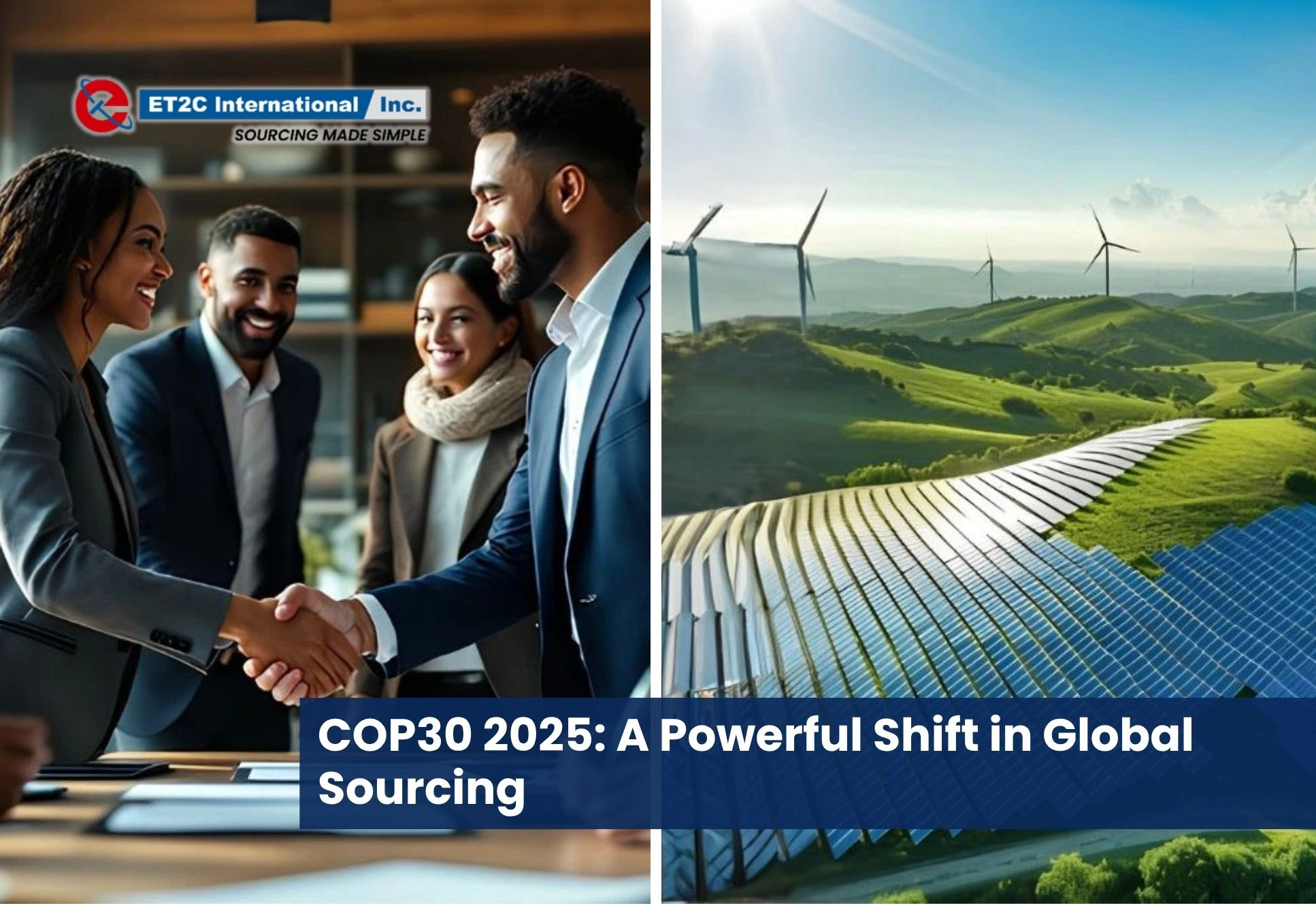
COP30 2025: A Powerful Shift in Global Sourcing
COP30 2025 has redrawn the rules of global sourcing. For professionals in global sourcing and strategic sourcing, the summit in Belém was not about diplomacy or distant emissions pledges. It was about execution, accountability, and action, and it has repositioned the supply chain as the front line of climate performance.
Held in Belém, Brazil, from 10 to 21 November 2025, a decade after the Paris Agreement, COP30 2025 was billed as the “COP of Implementation”. Under Brazil’s banner of mutirão, meaning collective effort, 195 parties adopted the Belém Package of 29 decisions. For global sourcing and strategic sourcing leaders, the decisions made in Belém will shape how businesses navigate climate risk, manage cost pressure, and redefine supply chain resilience in a low-carbon economy.
At ET2C International, we help brands, retailers and wholesalers turn shifts exactly like this into competitive advantage. Our 200 colleagues are based on the ground in key sourcing markets, key sourcing markets China, Vietnam, India and Turkey, enabling rapid and effective execution of strategic sourcing plans and the transformation of transactional suppliers into strategic, ESG-aligned partners. As COP30 2025 rewrites the global sourcing rulebook, our in-market sourcing and procurement teams help you stay ahead of it.

The COP30 Mandate for Climate Action
COP30 2025 carried a singular ambition: to close the widening global emissions gap and put the 1.5°C target back within reach. Nations submitted their third round of Nationally Determined Contributions (NDCs), with over 122 countries filing new or updated plans through 2035. According to the official COP30 outcomes, parties agreed to triple adaptation finance by 2035 and, for the first time, opened a formal UNFCCC track on trade, directly connecting climate action to global sourcing and supply chains. The summit focused on translating policy into practice, emphasising tripling renewable energy capacity, phasing out fossil fuel subsidies, and supporting a just transition. Brazil, as host, showcased hydropower, biofuels, and green hydrogen, a model of coupling energy independence with sustainable development that Asian sourcing hubs are beginning to emulate.
Why Global Sourcing Is Central to Climate Progress
For the corporate world, the supply chain is ground zero for climate accountability, and global sourcing teams are on the front line. Scope 3 emissions, the indirect emissions generated through suppliers, logistics partners, and downstream activities, can account for more than 70 percent of a company’s total carbon footprint. Per the GHG Protocol Corporate Standard, Scope 3 emissions are difficult to measure, harder to control, but impossible to ignore. Procurement decisions now directly influence emissions performance and stakeholder trust.
The old global sourcing equation of cost, quality, and delivery has evolved to include a fourth dimension: carbon. COP30 2025 drives a new era of regulatory and market expectations that reposition global sourcing as a climate action lever. Supplier engagement, responsible material choices, and renewable energy integration are becoming cornerstones of resilient, future-ready sourcing strategies. Companies that lead in integrating environmental performance into vendor selection will not only meet compliance standards but gain reputational and financial advantage. Not sure how your supplier network scores on ESG, Scope 3, and traceability? Take our free Sourcing Stress Test to benchmark your readiness, or talk to our team.
The Rise of Strategic Sourcing for a Low-Carbon Future
Strategic sourcing is transforming from a procurement process into a central pillar of climate strategy. The emphasis has shifted from transactional decisions to systemic impact, where every sourcing activity becomes an opportunity to achieve net-zero progress. At COP30 2025, governments and businesses called for frameworks that align corporate sourcing practices with national climate goals, including science-based target alignment, decarbonisation roadmaps through 2035, and stricter disclosure rules.
Strategic sourcing teams must now evaluate suppliers not only on capability and cost but on emissions data transparency, renewable energy adoption, and innovation in low-carbon materials. Investments in traceability platforms, digital reporting tools, and supplier agreements are essential to transforming ambition into measurable outcomes, exactly the kind of execution our sourcing and procurement services are built to deliver.
Asian Sourcing: Challenges and Competitive Opportunities
Asian sourcing continues to anchor the global manufacturing base. However, the region’s prominence brings both responsibility and opportunity as climate policies tighten. COP30 2025‘s emphasis on just transitions and clean technology incentives will accelerate investment into renewable manufacturing, electric mobility, and next-generation materials across Asia.
For businesses relying heavily on Asian sourcing, this evolving landscape requires proactive adaptation. Governments in India, Vietnam, China, and Indonesia are advancing new carbon and sustainability frameworks that will directly shape supplier operations. Forward-looking companies are already developing dual sourcing and regional diversification strategies, a China Plus One approach, to strengthen climate resilience and market agility. The opportunity is clear: Asian sourcing that embraces green innovation can position itself as a preferred partner for global value chains seeking lower-carbon production and compliance with stricter emission disclosure rules.
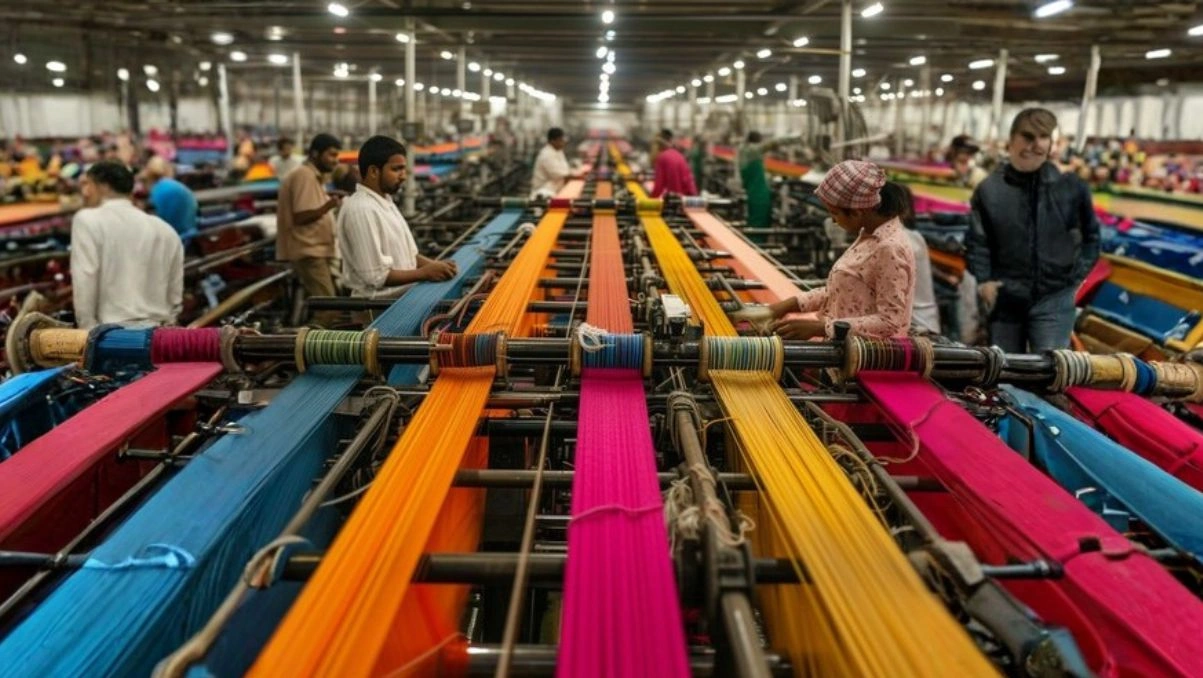
ET2C International: Global Sourcing Experts on the Ground
ET2C are a British-owned global sourcing company with over 25 years of experience working with our clients to make their sourcing simpler. Our 200 colleagues are based on the ground in key sourcing markets — China, Vietnam, India and Turkey, to enable rapid and effective execution of strategic sourcing plans. Our team acts as your bridge to your Asian sourcing partners, enabling the transformation of transactional suppliers into strategic suppliers, and managing quality, compliance, and ESG commitment delivery. Through our unique buying office model and quality assurance teams, we help you prove, not just claim, sustainable sourcing. To learn more about how we can help transform the effectiveness of your supplier network, speak to one of our expert team.

Transparency, Forests, and Natural Climate Solutions
Forests and biodiversity were at the heart of COP30 2025, given Brazil’s stewardship of the Amazon. Brazil launched the Tropical Forests Forever Facility, mobilising over USD 5.5 billion with 53 countries endorsing it, per Carbon Brief’s analysis. For global sourcing and strategic sourcing leaders, this has direct implications. Supply chains dealing in forest-linked commodities such as beef, soy, leather, timber, and paper packaging will face increasing pressure to guarantee traceability and verify origin. Businesses unable to ensure deforestation-free sourcing will face reputational, regulatory, and marketplace risk as new consumer disclosure laws take effect in the EU and beyond. This era of supply chain transparency demands digital solutions, blockchain traceability, AI-driven supply chain audits, and supplier scorecards, that provide visibility down to the raw material level.
Financing the Supply Chain Transition
A major pillar of COP30 2025 was climate finance, centred on mobilising new funds for adaptation, mitigation, and loss and damage in developing economies. For the private sector, this signals a growing emphasis on the polluter-pays principle and a broader accountability framework extending to outsourced production and logistics, the core of global sourcing.
Strategic sourcing professionals will need to work closely with finance teams to access climate-linked capital, design supplier sustainability incentive programmes, and align investments with verified emissions reductions. Access to green finance may increasingly depend on a company’s ability to demonstrate measurable decarbonisation progress across its sourcing networks.
Global Sourcing Resilience and Adaptation as a Core Competence
Climate resilience is now fundamental to business continuity. Operational risks from extreme weather, flooding, droughts, and heat stress, require global sourcing leaders to integrate risk analysis and scenario planning into their strategies. Adaptive investments in sustainable infrastructure, renewable supply options, and regional sourcing diversification can reduce downtime and protect revenue. COP30 2025 reinforced this theme, encouraging companies to embed climate adaptation within supply chain governance. The path ahead blends compliance with competitiveness: those who strengthen environmental and social governance today, and build genuine supply chain resilience, will thrive in tomorrow’s transformed trade environment.
Building Collective Momentum: The Mutirão Mindset
Brazil’s concept of mutirão, a collective effort grounded in cooperation, captures the spirit needed to operationalise climate goals across global supply chains. Achieving net-zero progress requires systemic coordination among global sourcing leaders, suppliers, regulators, and financial institutions. For global sourcing and strategic sourcing professionals, this is more than an environmental mandate, it is a business transformation opportunity. A new wave of partnerships is forming across jurisdictions, combining local expertise with global innovation to create climate-positive sourcing models that drive both impact and profitability. COP30 2025 is not the end of a conversation; it is the beginning of concerted action, and how companies respond will define their competitive legitimacy.
Frequently Asked Questions

Anishi Gupta
Position: Digital Marketing Specialist
Anishi Gupta is a Digital Marketing Specialist focused on performance marketing, content strategy, and data-driven growth at ET2C LinkedIn or anishi.g@et2c.com.