Buying Office vs Centralised Procurement: Which Model Works Better in Practice?
By ET2C International | Global Sourcing & Procurement Intelligence Most businesses centralise procurement to control cost and standardise process. The ones that consistently win at global sourcing know exactly when that model breaks down.
Centralised procurement works well when you are buying standardised goods from known suppliers in stable markets. It starts to fail when your supply chain crosses time zones, languages, production cultures, and regulatory environments.
At that point, the distance between a head office decision and a factory floor outcome becomes a commercial risk, and the question of whether to deploy a buying office or a procurement agent in-market becomes one of the most consequential structural choices in global sourcing.ET2C International has operated buying offices (on behalf of clients in Europe, the UK, and the USA) across China, India, Vietnam, and Turkey for over 25 years.
Our in-market teams act as an extension of our clients’ procurement functions, providing supplier qualification, quality oversight, compliance management, and sourcing support in the markets where it is needed most. The difference between a buying office model and centralised procurement is not a question of preference. It is a question of what your supply chain actually requires to perform. Explore ET2C’s buying office services or read how our buying office model delivers procurement execution for brands, retailers and wholesalers.

What Is a Buying Office?
A buying office is a permanent or semi-permanent in-market presence established to manage sourcing activities on behalf of a business in a specific manufacturing region. Unlike a transactional sourcing agent engaged for a single project, a buying office provides continuity: the same team, the same supplier relationships, the same institutional knowledge, applied consistently across every order and every season.
A buying office typically covers supplier identification and qualification, price negotiation, order placement and follow-up, quality inspection and compliance oversight, production monitoring, and logistics coordination. It operates as the buyer’s eyes, ears, and voice in the market not as an intermediary extracting margin but as an integrated function of the procurement operation. CIPS guidance on sourcing strategy identifies in-market presence as a critical enabler of supply chain performance for businesses operating across multiple geographies, noting that proximity to suppliers materially improves quality outcomes and relationship continuity.
Buying Office vs Sourcing Agent: Understanding the Difference
The terms buying office and sourcing agent are often used interchangeably but describe structurally different arrangements. A sourcing agent sometimes called a procurement agent is typically engaged on a transactional basis, earning a commission on order value. A buying office operates on a retained or fee basis with no commercial interest in which supplier is selected or at what price. This matters enormously: a procurement agent paid on commission has an incentive to maximise order value and protect supplier relationships. A buying office has an incentive to optimise outcomes for the buyer.
What Does a Sourcing Agent Do?
Understanding what a sourcing agent does is important because the role varies significantly in quality, scope, and alignment. At its most basic, a sourcing agent identifies potential suppliers, facilitates samples and quotations, and manages order communication between buyer and factory. At its most sophisticated, a procurement agent provides market intelligence, supplier risk assessment, negotiation support, and production oversight that meaningfully improves sourcing outcomes.
The quality of sourcing support depends on three factors: the agent’s depth of market knowledge in the specific sourcing territory, the independence of their commercial interests from the suppliers they recommend, and their capability to provide verification rather than simply coordination. A sourcing agent who cannot conduct independent quality inspections, who lacks sub-tier visibility, or who earns commissions from factories they recommend is providing a fundamentally lower-value service than a buying office model built on aligned incentives and in-market expertise. ET2C’s frequently asked questions about our sourcing services explain exactly how our model differs from traditional agent arrangements.
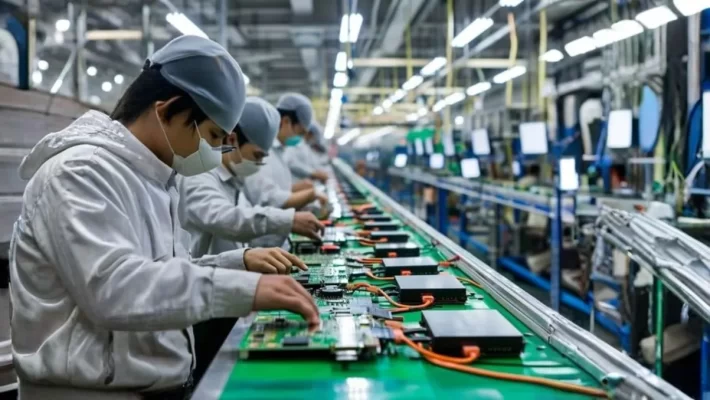
This is exactly where the ET2C model is built to outperform a conventional sourcing agent. Our in-market teams are salaried ET2C professionals, not commission-earning intermediaries, so the advice you receive is independent of supplier interests. We conduct our own quality inspections, maintain sub-tier visibility into the factories behind your factories, and provide verified production oversight rather than simple order coordination. The result is sourcing support that genuinely protects your margin and your brand rather than quietly working against both.
To see how ET2C’s buying office approach compares to a traditional procurement agent for your specific sourcing markets, take our Sourcing Stress Test or contact our team directly to discuss your requirements.
China Sourcing Agent Services: What Experienced Buyers Look For
China remains the world’s most important single-country manufacturing base, and China sourcing agent services span an enormous range of capability and credibility. Experienced procurement teams evaluating China sourcing agent options look for four things: local language capability at a technical level; direct factory access and established supplier relationships across relevant product categories; independent quality control capability including unannounced factory visits and in-process inspections; and transparent commercial structures with no undisclosed supplier commissions. The OECD Due Diligence Guidance for Responsible Business Conduct specifically identifies independence of sourcing intermediaries as a key governance factor in supply chain due diligence programmes.
Where Centralised Procurement Works Well
Centralised procurement is not the wrong model. For many categories and businesses it is exactly the right one. Indirect spend, commodity purchasing, domestic or near-shore supplier relationships, and categories where specification is highly standardised all lend themselves to centralised management. The efficiency gains from consolidated purchasing power, streamlined processes, and unified supplier governance are real and material. The McKinsey research on supply chain operating models identifies centralisation as the highest-value structural choice for businesses where purchasing complexity is low and supplier markets are transparent. When those conditions hold, deploying in-market sourcing support adds cost without proportionate return.
Where Centralised Procurement Falls Short
The model starts to fail when complexity increases and distance grows. Managing a global sourcing relationship from a London or New York headquarters through email and quarterly visits consistently produces the same problems: specification ambiguity surfacing at production stage, quality deviations caught too late to correct without cost, undisclosed subcontracting that undermines compliance programmes, and supplier relationships that drift toward serving the factory’s interests rather than the buyer’s.
The Execution Gap: Why Distance Creates Commercial Risk
The execution gap is the distance between a procurement decision made at head office and what actually happens on a factory floor in Guangzhou, Surat, or Ho Chi Minh City. It manifests in three ways. First, specification drift: what a buyer communicates remotely and what a factory understands locally are rarely identical without in-market translation and verification. Second, quality variability: production quality is consistent when monitored, and monitoring from a distance is structurally less effective than in-market oversight. Third, relationship asymmetry: suppliers build relationships with people physically present. A head office team managing solely by email is structurally disadvantaged in negotiations and problem resolution compared to a buying office team. Read ET2C’s analysis of why dedicated buying offices deliver better procurement outcomes.
The ET2C Buying Office Model: On-the-Ground Execution That Performs
ET2C International’s buying office model was built specifically to close the execution gap that undermines remotely managed procurement. Rather than acting as a commission-based sourcing agent with divided loyalties, our in-market teams operate as a dedicated extension of our clients’ procurement functions fully aligned to the buyer’s commercial interests, with no undisclosed supplier relationships and no incentive to inflate order value. With offices across China, India, Vietnam, and Turkey, our teams provide end-to-end sourcing support: supplier identification and qualification, price negotiation, order management, independent quality inspection at every production stage, social compliance auditing, and logistics coordination.
Because we are physically present in the markets where your products are made, we identify and resolve issues of specification ambiguity, quality deviation, and undisclosed subcontracting within days rather than discovering them at pre-shipment inspection or, worse, at your receiving dock. This is the structural advantage of a genuine buying office over a transactional procurement agent: continuity, independence, and verified in-market execution. Explore the full ET2C buying office model or read more about why dedicated buying offices outperform remote procurement.
To find out whether a buying office model is right for your sourcing operation, take ET2C’s Sourcing Stress Test to benchmark your current programme, or contact our team directly to discuss your sourcing support requirements with our in-market experts.
When a Buying Office Delivers Better Results
High-Volume, Multi-Supplier, or Season-Critical Programmes
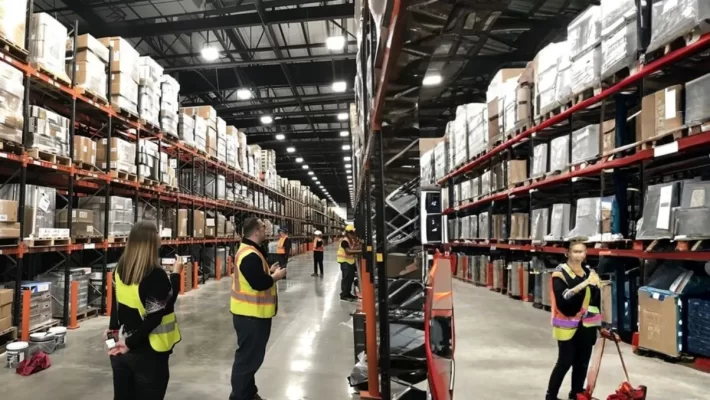
A buying office model consistently outperforms centralised procurement when three conditions are present: production volumes are significant enough that quality deviations carry material commercial consequences; the supply base involves multiple suppliers across multiple tiers requiring local knowledge; and delivery windows are season-critical meaning a production failure caught late cannot be recovered without significant cost. In these conditions, the buying office pays for itself through the failures it prevents rather than the margin it extracts. Find out more about how ET2C structures this on the buying office services page.
Quality-Critical or Compliance-Heavy Categories
For categories where product safety, regulatory compliance, or ethical sourcing standards are non-negotiable children’s products, pharmaceuticals, food contact materials, or any category subject to the EU General Product Safety Regulation or the UK Modern Slavery Act a buying office with independent quality and compliance capability is a risk management necessity, not a preference. ET2C’s quality assurance and inspection services are built directly into our buying office model, providing integrated quality and compliance oversight rather than separate siloed functions. CIPS guidance on managing suppliers confirms that close-proximity supplier management is most critical precisely in high-risk, high-complexity categories.
Frequently Asked Questions
ET2C International | Global Sourcing, Quality & Compliance

Anishi Gupta
Position: Digital Marketing Specialist
Anishi Gupta is a Digital Marketing Specialist focused on performance marketing, content strategy, and data-driven growth at ET2C LinkedIn or anishi.g@et2c.com.