Should we consider India for Global Sourcing both manufacturing AND IT/tech services?
For many Western companies, India has traditionally occupied two very different positions within global sourcing strategies. On one hand, it has been recognised as a global leader in IT services, software development, and technology outsourcing. On the other hand, it has often been viewed as an emerging or supplementary option for manufacturing, rather than a primary production hub.
That distinction is rapidly becoming outdated. As India for Global Sourcing, supply chain resilience, and digital transformation become increasingly interconnected, businesses are being forced to reassess how and where they operate. Manufacturing and technology are no longer separate operational pillars. They are now deeply integrated components of modern enterprise strategy. This shift has made a critical question unavoidable: should India be considered not just for manufacturing or IT services individually, but for both together and at scale?
The answer matters because today’s competitive advantage lies not simply in cost efficiency, but in execution speed, operational resilience, digital integration, and long-term scalability.
Why This Question Matters in Today’s India for Global SourcingSourcing Environment
The structure of India for Global Sourcing has fundamentally changed. Western companies are no longer optimising purely for labour arbitrage or lowest-cost manufacturing. Instead, sourcing decisions are increasingly shaped by geopolitical risk, trade disruptions, supply chain fragility, and the need for end-to-end visibility.
Recent years have exposed the vulnerabilities of overly concentrated sourcing models. In response, companies are actively pursuing China+1 strategies, multi-country sourcing, and more diversified operational footprints. At the same time, digital transformation has accelerated across industries, making technology infrastructure, data integration, and IT capability central to manufacturing success.
In this environment, the separation between manufacturing hubs and technology hubs is no longer efficient. Businesses now need locations that can support physical production and digital execution simultaneously. This is where India’s evolving position in India for Global Sourcing becomes strategically significant.
India for Global Sourcing Established Strength in IT and Tech Services
India’s role as a global powerhouse for IT and technology services is well-documented and widely accepted. Over the past three decades, India has built deep and scalable capabilities across software engineering, cloud computing, enterprise IT services, cybersecurity, data analytics, and artificial intelligence.
For Western enterprises, India has become a preferred destination for global capability centres, product engineering teams, and 24/7 delivery models. The country offers access to a large pool of highly skilled technical talent, mature delivery frameworks, and the ability to scale digital operations rapidly. This maturity has made India a cornerstone of global IT sourcing and technology outsourcing strategies.
What is often underestimated, however, is how this digital depth directly supports manufacturing operations. Modern manufacturing environments rely heavily on enterprise systems, automation software, manufacturing execution systems, and data-driven decision-making. India’s ability to design, implement, and manage these systems at scale creates a natural bridge between technology and production.
India’s Rapidly Maturing Manufacturing Ecosystem
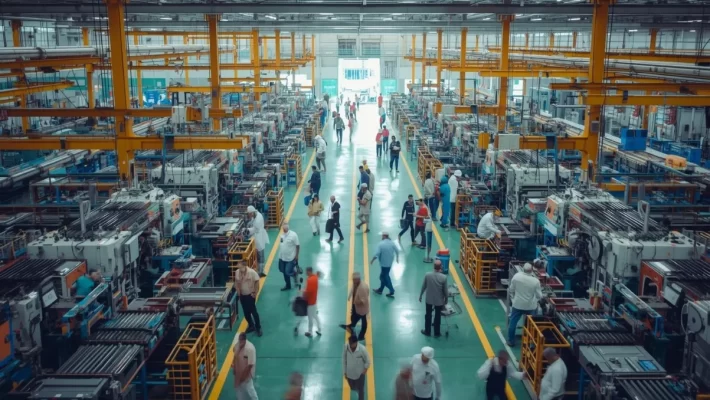
In parallel with its IT growth, India’s manufacturing ecosystem has undergone a significant transformation. Historically, India’s factories were largely focused on serving domestic demand, with limited export orientation and inconsistent integration into global supply chains. That reality has changed.
Driven by policy reform, infrastructure investment, and increasing participation in global sourcing networks, India now supports export-ready manufacturing across a wide range of industries. Improvements in quality standards, regulatory compliance, and logistics capability have enabled Indian manufacturers to meet the expectations of Western markets more consistently.
India today supports high-volume production in sectors such as electronics manufacturing, automotive components, pharmaceuticals and healthcare, industrial and engineered goods, textiles and apparel, and renewable energy equipment. Importantly, this growth is no longer limited to low-value manufacturing. Many Indian facilities now operate with process maturity, quality discipline, and operational sophistication comparable to other established manufacturing hubs.
Where Manufacturing and Technology Truly Converge
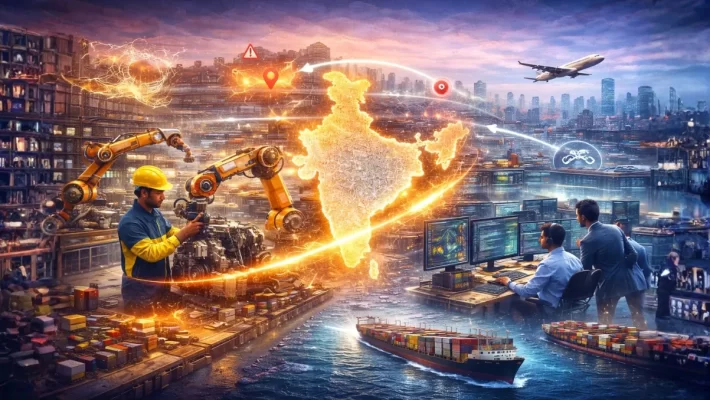
The most compelling reason to consider India for both manufacturing and IT services lies in the convergence of these two capabilities. Modern manufacturing is no longer defined solely by machinery and labour. It is increasingly shaped by digital systems, real-time data, and automation.
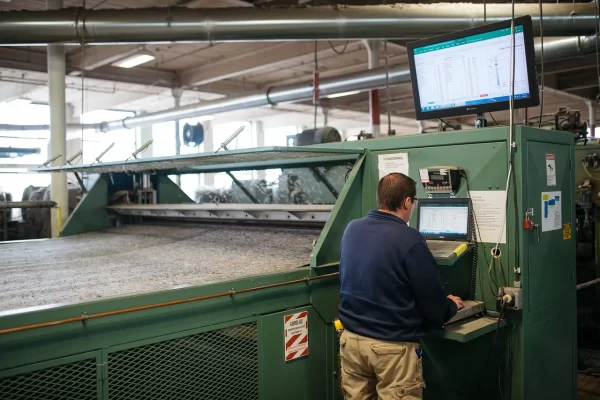
Factories today depend on ERP platforms, supply chain software, predictive maintenance systems, AI-driven quality control, and data analytics dashboards. India’s unique advantage is that the teams building and maintaining these digital systems can operate within the same ecosystem as manufacturing operations. This proximity reduces friction, improves coordination, and accelerates innovation.
For companies engaged in global sourcing, this integration allows for tighter control over production, better visibility across supply chains, and faster response to operational challenges. Rather than managing technology remotely and manufacturing locally or vice versa, India enables a more cohesive operating model.
Why Global Sourcing Leaders Are Reassessing India Holistically
Western sourcing leaders are increasingly viewing India not as a single-function destination, but as a multi-capability sourcing hub. This shift is being driven by the need for resilience, speed, and operational integration.
India’s combination of manufacturing scale, engineering depth, IT capability, and cost efficiency makes it uniquely positioned within global sourcing strategies. Unlike some emerging manufacturing hubs that offer scale without digital maturity, or technology hubs that lack production capability, India increasingly delivers both.
This holistic value proposition is particularly attractive for companies pursuing China+1 sourcing models, where India acts not as a marginal add-on but as a primary secondary hub capable of supporting complex, long-term operations.
Use Cases Where India Delivers Strong Dual Capability
India’s ability to support both manufacturing and technology is most evident in use cases where digital integration is critical. Many export-oriented factories in India are supported by locally developed enterprise systems that manage production planning, inventory, compliance, and logistics. Technology teams work closely with operations to optimise performance, reduce downtime, and improve quality consistency.
Product-based companies are also leveraging India’s dual strengths by placing R&D, software development, and manufacturing within the same geography. This proximity shortens development cycles, improves collaboration between design and production teams, and accelerates time-to-market.
In addition, India plays a growing role in supply chain technology, supporting platforms for vendor management, compliance tracking, logistics optimisation, and export documentation. These capabilities are increasingly critical for Western companies managing complex, multi-country sourcing networks.
India for Global Sourcing : Challenges Companies Must Still Navigate
Despite its advantages, India is not a uniform or frictionless market. Capability varies by region, sector, and supplier maturity. Companies that approach India expecting a plug-and-play experience often encounter misalignment, delays, or quality issues.
The most common challenge is the disconnect between manufacturing operations and IT strategy. When these functions are treated separately, businesses fail to capture the full value of India’s ecosystem. Successful engagement requires clear governance structures, alignment between digital and operational teams, and strong local execution.
India rewards companies that invest time in understanding its operating environment and building long-term partnerships rather than pursuing purely transactional sourcing relationships.
Execution Discipline as the Real Differentiator
The defining factor in successful sourcing from India is not capability, but execution discipline. Companies that succeed are those that design clear operating models, integrate technology with manufacturing goals, and maintain consistent oversight.
Western organisations that invest in preparation, governance, local expertise, and relationship continuity are already operating integrated manufacturing and technology ecosystems in India with strong results. Those that do not often struggle, not because India lacks capability, but because execution frameworks are weak.
How India for Global Sourcing Compares to Other Global Sourcing Hubs
Few global locations offer the same combination of manufacturing scale and IT depth. Some regions provide low-cost production without digital sophistication, while others excel in technology services but lack industrial capacity. India increasingly stands out by delivering across both dimensions.
Within global sourcing and China+1 strategies, India is emerging as a central pillar rather than a peripheral option. Its ability to support both physical production and digital operations positions it as a long-term strategic base rather than a short-term alternative.
Final Perspective: India for Global Sourcing—Manufacturing and IT Together
So, should Western companies consider India for both manufacturing and IT or tech services?
The answer is yes when approached strategically.
India today is capable of supporting large-scale manufacturing, advanced IT services, and digitally integrated operations within a single ecosystem. The companies seeing the greatest success are not asking whether India can deliver. They are focused on how to structure their sourcing models, governance frameworks, and partnerships to capture their full potential.
India is no longer just a place to make products or write code. It is increasingly a place to build integrated systems, scale global operations, and align technology with production.
India for Global Sourcing Is No Longer the Question — How Companies Engage Is
FAQs: India for Global Sourcing, Manufacturing & IT
Is India for Global Sourcing a good destination in 2025 and beyond?
Yes. India for Global Sourcing is increasingly central to global sourcing strategies due to its manufacturing scale, engineering talent, and IT/tech capabilities. Companies are using India to build resilient, diversified supply chains that support both physical production and digital operations.
Can India for Global Sourcing support both manufacturing and IT services at scale?
India is one of the few countries that can support large-scale manufacturing and advanced IT services simultaneously. This allows companies to integrate production, technology, data, and supply-chain systems within a single ecosystem, improving speed and operational control.
How does India for Global Sourcing compare to China in global sourcing strategies?
India is not replacing China but complementing it within China+1 sourcing models. It offers long-term capacity growth, strong engineering depth, and expanding export readiness, making it a preferred secondary hub rather than a marginal alternative.
Which industries benefit most from India for Global Sourcing in manufacturing and IT?
Industries such as electronics, automotive components, pharmaceuticals, industrial goods, textiles, renewable energy, and technology-enabled manufacturing benefit most from India’s combined strengths in production scale and digital capability.
What is the biggest risk when India for Global Sourcing manufacturing and IT from India?
The main risk is not capability but execution. Companies that succeed invest in clear governance, local expertise, and long-term partnerships. Those expecting a plug-and-play model often underperform. ET2C is best suited for global buyers, international manufacturers, and sourcing teams that want to enter or expand in India for Global Sourcing with strong quality control, local accountability, and long-term sourcing discipline.

Anishi Gupta
Position: Digital Marketing Specialist
Anishi Gupta is a Digital Marketing Specialist focused on performance marketing, content strategy, and data-driven growth at ET2C LinkedIn or anishi.g@et2c.com.