What Changes After the India EU FTA?
If you run a business today across manufacturing, exports, retail, supply chains, or global sourcing, the India EU Free Trade Agreement (FTA) is no longer something you can ignore. This landmark agreement directly influences market access, pricing competitiveness, and long-term growth opportunities for Indian enterprises and global buyers.
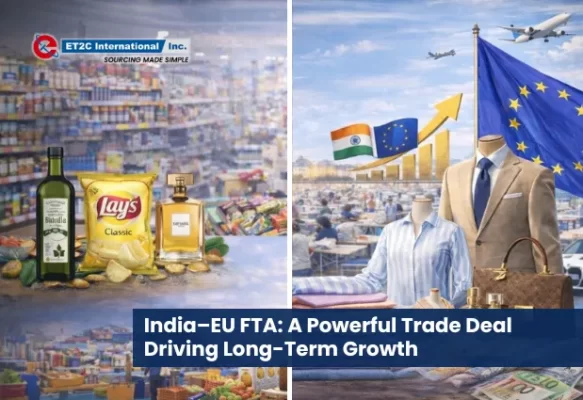
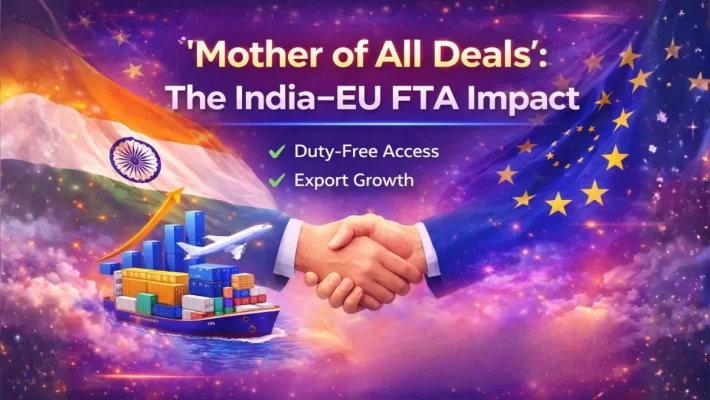
Widely referred to as the “Mother of All Deals,” the India–EU FTA stands out as one of India’s most comprehensive trade agreements in recent decades. It strengthens India’s integration with one of the world’s largest and most stable consumer markets, while positioning the country as a more strategic and reliable partner within global trade and sourcing ecosystems.
This agreement goes beyond tariff reductions. It reflects a deeper shift toward scale-ready manufacturing, smoother market entry, and alignment with how modern businesses source, produce, and distribute at speed. For companies planning expansion, diversification, or long-term sourcing strategies, the India EU FTA reshapes how competitiveness is built and sustained.
For organisations seeking structured, low-risk execution, having reliable on-ground support is critical. ET2C offers dedicated teams in key sourcing regions, helping businesses navigate compliance, supplier management, and operational execution with confidence.
Why the India EU FTA Is a Turning Point for Global Sourcing
The structure of global sourcing has fundamentally changed over the last decade. Businesses are no longer optimising purely for the lowest unit cost. Instead, sourcing strategies are shaped by supply chain resilience, market diversification, predictable logistics, and regulatory clarity.
Recent global disruptions exposed the risks of over-concentration. As a result, companies are actively redesigning sourcing models to ensure continuity, flexibility, and long-term stability. In this context, the India EU FTA arrives at a critical moment.
By reducing or eliminating duties across multiple sectors, the agreement lowers friction for global buyers while increasing competitiveness for Indian manufacturers. This alignment makes India more attractive within global sourcing strategies focused on sustainable growth rather than short-term arbitrage.
What the India EU FTA Actually Changes
At its core, the India EU FTA focuses on duty reduction, duty elimination, and improved market access. These changes affect pricing, margins, and sourcing decisions across a wide range of industries.
The most important shift is this:
Indian products become more competitive, and sourcing from India becomes more commercially viable for global clients.
This directly impacts exporters, manufacturers, MSMEs, and supply chain partners who are integrated into global trade flows.
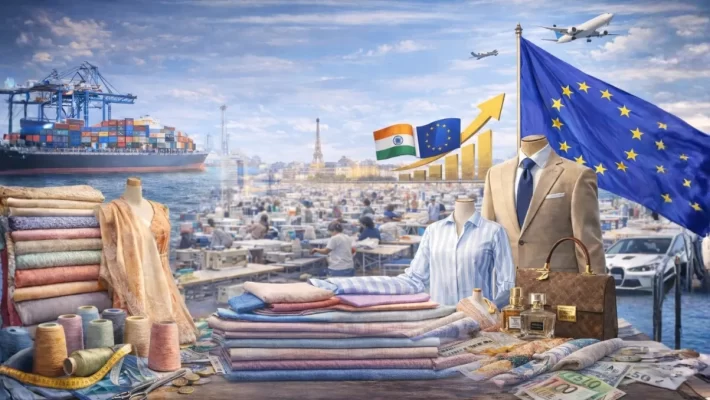
Textiles and Apparel: A Major Export Breakthrough
The textile and apparel industry stands out as one of the largest beneficiaries of the India EU FTA.
With duty-free access to the EU market, Indian textile exporters gain a significant advantage in one of the world’s most competitive retail environments. Apparel, home textiles, fabrics, and finished garments can now reach EU buyers without the tariff burden that previously reduced margins.
For global buyers, this creates a compelling sourcing proposition:
- Competitive pricing without compromising quality
- Large-scale manufacturing capacity
- Established export experience and compliance familiarity
India’s textile sector already operates at scale. The FTA amplifies that strength by improving price positioning and long-term contract viability. This reinforces India’s role as a global textile sourcing hub.
Agriculture Exports Gain Duty-Free Access
A critical but often under-discussed benefit of the India EU FTA is duty-free access for agricultural products.
Indian agricultural exports, including processed foods, grains, spices, fruits, and value-added products, gain improved entry into the EU market. This opens new revenue channels for exporters while strengthening farm-linked supply chains.
For global sourcing teams, India becomes a more reliable destination for agricultural procurement, supported by:
- Large production volumes
- Product diversity
- Improving processing and packaging standards
This development directly supports agri-business growth, food processing units, and export-oriented rural industries, extending the benefits of global trade beyond urban manufacturing hubs.
Furniture and Home Products Enter Duty-Free Territory
The furniture and home products sector sees a major opportunity under the India EU FTA.
With duty-free access, Indian manufacturers of wooden furniture, metal furniture, décor items, and home accessories can compete more effectively in a high-value EU market. This is particularly important for products where design, craftsmanship, and pricing must align.
For global buyers and global clients, India offers:
- Cost-efficient production
- Skilled craftsmanship
- Scalable manufacturing clusters
The agreement strengthens India’s position within global sourcing networks for home and lifestyle products, an area with growing demand and recurring purchase cycles.
Leather, Jewellery, and MSME-Driven Manufacturing
Sectors such as leather goods and jewellery benefit from improved market access and reduced duties, directly supporting India’s MSME ecosystem.
These industries are labour-intensive and regionally distributed, meaning the impact of the FTA is both economic and social. Improved export conditions translate into:
- Higher order volumes
- Stable employment
- Stronger regional manufacturing hubs
For global clients, India becomes a dependable partner for design-driven, value-focused manufacturing that aligns with long-term sourcing strategies.
Medical, Chemical, and Industrial Manufacturing
The India EU FTA also supports sectors such as medical devices, chemicals, and industrial goods by easing trade barriers and improving export viability.
These sectors are essential to global manufacturing supply chains, where consistency, compliance, and volume reliability matter more than short-term cost advantages.
India’s manufacturing base in these categories continues to mature, offering global buyers access to scale, engineering depth, and export readiness. The agreement enhances confidence for long-term sourcing commitments.
Why Global Buyers Are Reassessing India Now
The growing interest from global buyers is not driven by policy alone. It is driven by execution. India today offers a combination that is increasingly rare in global trade:
- Manufacturing scale
- Sector diversity
- Expanding export capability
- Competitive cost structures
The India–EU FTA strengthens this position by removing friction and improving price competitiveness. For global sourcing teams, India now supports both volume requirements and strategic sourcing objectives.
What This Means for Indian Businesses
While the India–EU FTA creates opportunities, it does not guarantee success. Businesses that benefit most are those that invest in quality consistency, compliance, and delivery reliability.
Export success under the agreement depends on:
- Understanding EU market expectations
- Maintaining documentation and standards
- Building long-term relationships with global clients
The FTA rewards companies that approach exports as a strategic function rather than a transactional activity.
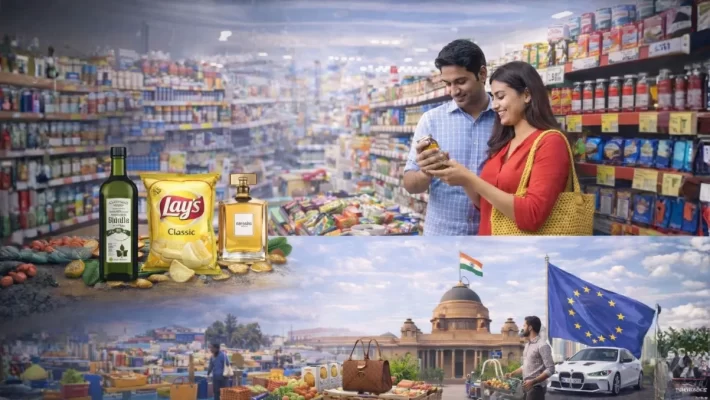
Impact on Domestic Markets and Consumers
Beyond exports, the agreement also influences the domestic market by reducing duties on selected imported goods. This increases competition and improves price efficiency.
Consumers benefit through:
- Better product availability
- More competitive pricing
- Higher quality benchmarks
Over time, this creates a healthier market ecosystem where businesses must innovate, optimise, and scale efficiently.
India’s Position in Global Trade After the FTA
The India EU FTA does not aim to replace any existing trade relationships. Instead, it strengthens India’s role as a core participant in global trade.
India is increasingly positioned as a country that can support:
- Global sourcing operations
- Manufacturing at scale
- Agriculture and value-added exports
- Long-term supply chain partnerships
This alignment makes India more relevant to global buyers looking for stability, scale, and strategic depth. Why This Truly Is the ‘Mother of All Deals’
The India–EU FTA earns its reputation because it delivers impact across multiple dimensions: economic, operational, and strategic. It supports exporters, empowers manufacturers, strengthens MSMEs, and simplifies sourcing decisions for global clients. Most importantly, it reflects a shift in how India engages with the world, not as a low-cost option, but as a reliable, scalable, and strategic partner in global sourcing. This is not just a trade agreement. It is a long-term growth framework.
If your business touches manufacturing, exports, supply chains, or global sourcing, this deal is already shaping your future, whether you respond to it or not. You can’t ignore it anymore.
FAQs
What is the India EU Free Trade Agreement,and why is it important?
The India EU Free Trade Agreement (FTA) is a trade deal aimed at reducing or removing duties on goods between India and the European Union. It is important because it improves market access, boosts exports, and strengthens India’s position in global sourcing and global trade.
Why is the India EU FTA called the “Mother of All Deals”?
It is called the “Mother of All Deals” because it impacts multiple sectors at once, manufacturing, agriculture, textiles, furniture, MSMEs, exports, and consumer markets, while connecting India with one of the world’s largest economies.
How will the India EU FTAbenefitIndian exporters?
Indian exporters benefit through duty-free or reduced-duty access, better pricing power, higher demand from global buyers, and long-term export stability. This helps businesses scale faster and compete more effectively in EU markets.
Which sectors gain the most from the India EU FTA?
High-impact sectors include textiles and apparel, agriculture, furniture and home products, leather, jewellery, medical devices, chemicals, and industrial manufacturing. Many of these now enjoy duty-free or preferential access to the EU.
Are agriculture, furniture, and textiles now duty-free in the EU?
Yes. Under the India EU FTA, agriculture products, furniture, and textiles gain duty-free or near-zero duty access, making Indian goods more competitive for global sourcing teams and global clients.
How does the India EU FTA help global buyers and sourcing teams?
The agreement helps global buyers by lowering sourcing costs, improving supplier diversity, and reducing supply-chain risk. India becomes a more attractive destination for reliable, large-scale global sourcing.
Will the India EU FTA create more manufacturing and jobs in India?
Yes. Increased exports and higher demand from EU markets are expected to drive manufacturing growth, MSME expansion, and job creation, especially in labour-intensive sectors like textiles, furniture, and agri-processing.
How does the India EU FTA support global sourcing strategies like China+1?
The FTA strengthens India’s role in China+1 and diversified sourcing strategies by improving price competitiveness, market access, and long-term trade stability. This makes India a stronger, more reliable sourcing partner.
Will Indian consumers alsobenefitfrom the India–EU FTA?
Yes. Reduced duties on selected imports can lead to better pricing, wider product choices, and increased competition, which benefits consumers over time.
What should businesses do now tobenefitfrom the India–EU FTA?
Businesses should review their product categories, upgrade export readiness, align with EU quality standards, and explore partnerships with global buyers. Early movers are likely to gain the strongest advantage.
Reach the team at contact@et2cint.com to learn more. ET2C provides a quick, risk-managed on-ground presence designed to support scalable sourcing and long-term growth.

Anishi Gupta
Position: Digital Marketing Specialist
Anishi Gupta is a Digital Marketing Specialist focused on performance marketing, content strategy, and data-driven growth at ET2C LinkedIn or anishi.g@et2c.com.