The 2026 Pivot: What the Canada-China Trade Deal Means for Global Sourcing and Logistics
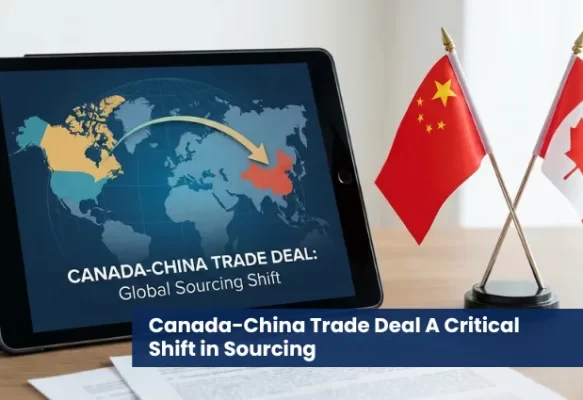
A rapid quick take on the just announced Canada-China Trade Deal agreement and what it may mean for global sourcing. In a move that has sent shockwaves through the North American trade corridor, Prime Minister Mark Carney and Chinese officials today signed a landmark preliminary trade agreement in Beijing. Dubbed the “EVs-for-Canola” deal, this agreement marks the official end of a two-year period of “deep-freeze” diplomacy and signals a massive shift in how Canada positions itself between the world’s two largest economies.
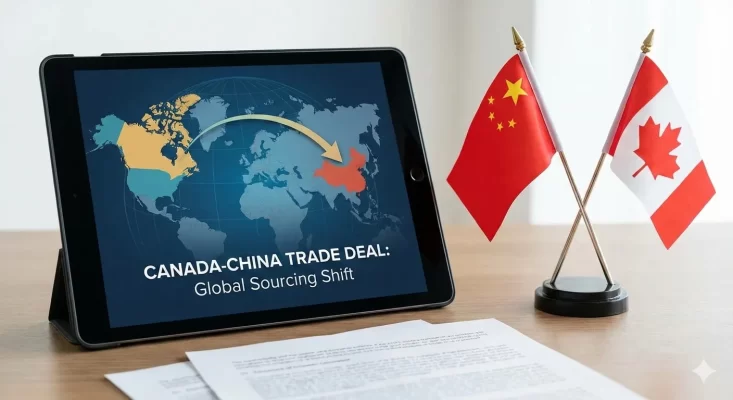
For supply chain managers, procurement officers, and logistics providers, this isn’t just a political headline—it is a fundamental restructuring of North American trade routing.
The Canada-China Trade Deal at a Glance: The “Grand Swap”
The centerpiece of the agreement is a reciprocal reduction in the prohibitive tariffs that characterized the 2024–2025 “trade war” era.
- Electric Vehicles (EVs): Canada will lower its “prohibitive” 100% tariff on Chinese-made EVs to a manageable 6.1%, capped at 49,000 units annually (rising to 70,000 by 2030).
- Agriculture: China will slash tariffs on Canadian canola seed from near-84% levels down to 15% by March 1, 2026.
- The “Joint Venture” Requirement: To maintain the 6.1% rate, Chinese manufacturers must commit to establishing joint-venture manufacturing plants on Canadian soil within three fiscal years.
The Scorecard: Winners and Losers in the Canada-China Trade Deal
No trade deal is without its casualties. The 2026 agreement creates a distinct new landscape of opportunity and risk:
The Winners
- Western Canadian Agriculture: Canola, beef, and pork producers in the Prairies have regained their most lucrative export market, unlocking an estimated $3 billion in new orders.
- Canadian Consumers: The average price of an entry-level EV is expected to drop by $12,000–$15,000 CAD, making the 2035 net-zero mandate feasible for the first time.
- Chinese Tech Giants: Brands like BYD and Xiaomi now have a “beachhead” in North America, allowing them to test market fit with a massive price advantage.
- West Coast Logistics: The ports of Vancouver and Prince Rupert will see an immediate surge in volume as trade pivots away from US-centric transit.
The Losers
- The “Detroit-Windsor” Auto Corridor: Traditional Ontario-based manufacturers now face a low-cost competitor on their home turf, threatening legacy jobs in Southern Ontario.
- US-Canada Diplomacy: The Trump administration has signaled “extreme disappointment.” This deal likely puts Canada’s USMCA (CUSMA) protections at risk during the mandatory 2026 review.
- Domestic EV Startups: Small Canadian tech firms that were relying on the 100% tariff “shield” must now compete with Chinese state-backed giants that have a 10-year head start on scale.
Canada-China Trade Deal Global Sourcing: Moving to a “Multi-Nodal” Model
As Canada moved away from the previous straight line single supplier model to a more flexible system. For global sourcing teams, the implications are profound:
- Diversification Away from the US: Canada is signaling it will no longer move in total lockstep with US trade policy. Sourcing teams can now look to Canada as a unique entry point for Chinese technology that may remain blocked in the States.
- The Rise of Near-Shoring 2.0: With the joint-venture requirement, we expect a surge in “hybrid” manufacturing—using Chinese IP and battery tech combined with Canadian raw materials (lithium, nickel).
- Tariff Engineering: Companies must become experts in “Rules of Origin.” Navigating the difference between a Chinese-made EV and a Canadian-assembled vehicle will be the key to maintaining margins.
Canada-China Trade Deal: The Start of a Global Trade Rerouting: Bypassing the South
We are witnessing a physical rerouting of the flow of goods across the Pacific:
- The West Coast Surge: With the fast-tracking of the Roberts Bank Terminal 2 expansion, Canada is preparing to handle direct Asian cargo at unprecedented scales.
- Avoiding US Transshipment: To avoid potential retaliatory “secondary tariffs” from the US, logistics providers are prioritising “All-Canada” routes. Expect goods to move from Prince Rupert directly into the Canadian interior via rail, bypassing traditional US hubs like Chicago or Memphis.
- Direct Shipping Lanes: Carriers are already announcing new direct service strings between Shanghai/Ningbo and Vancouver, reducing reliance on volatile US West Coast ports.
The Bottom Line for Global Sourcing
The January 16 agreement is a clear signal: The era of the unified North American trade front is over. As market analysts noted for businesses operating in Canada, this provides a “first-mover advantage” to access world-class green technology. However, it also introduces significant geopolitical friction. Now is the time to audit your supply chain for “US-exposure” and consider how these new Canadian-Chinese corridors can work for your bottom line.Contact us

David Young
Position: Group Marketing Director
David W. Young is a recognised thought leader in global sourcing and procurement, sharing expert insights on navigating inflation, managing overheads, and building resilient supply chains. He champions strategic solutions for maximising business value in a volatile world. LinkedIn or david.y@et2c.com.LinkedIn or david.y@et2c.com.