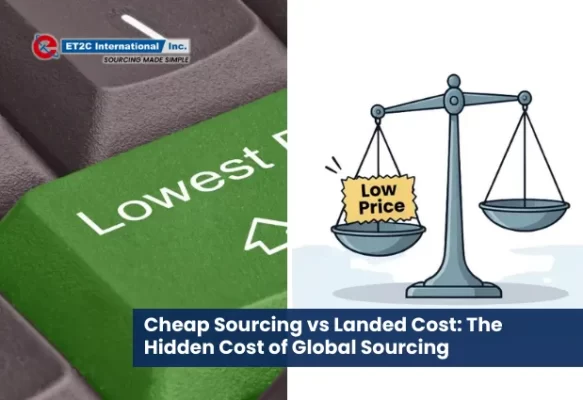
The Real Cost of Cheap Sourcing: Why Landed Cost Is the Only Number That Matters
The supplier quoted $4.20 per unit. By the time the shipment arrived at the warehouse, cleared customs, passed inspections, and replaced defective units, the real cost was closer to $7.80. This is not an exception. It is the pattern.
In modern global sourcing, the number printed on the quotation sheet, the factory price, is only the beginning of the cost conversation. Yet many procurement teams still select suppliers based purely on unit price. The result is margin erosion driven by rising quality cost, unmanaged quality risk, freight volatility, compliance failures, and hidden operational expenses. The reality is simple: cheap sourcing rarely remains cheap once the full landed cost is understood.
The Gap Between Quoted Price and Real Cost
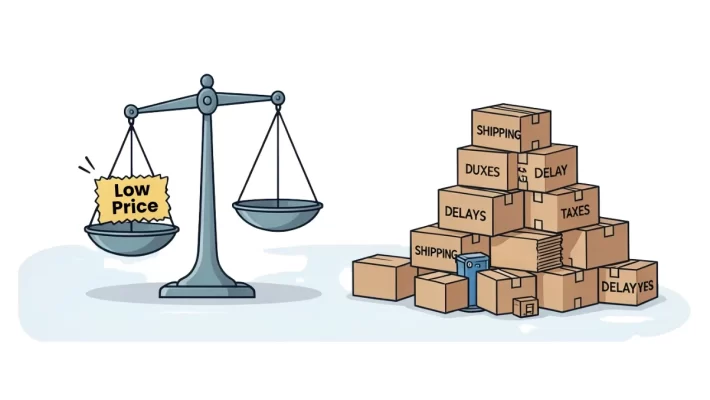
At first glance, a lower factory price appears to create immediate savings. If Supplier A offers $4.20 and Supplier B offers $4.90, the decision may look obvious. But landed cost includes far more than the unit price.
Freight, duties, customs clearance, inspection, testing, packaging compliance, currency movement, and internal management time all contribute to the real cost per unit. When these are included, the supplier with the lowest factory price is often not the supplier with the lowest total cost of ownership. This is where many international procurement strategies fail. The comparison is incomplete. The focus remains on the visible price rather than the comprehensive landed cost calculation. In competitive markets, margin is protected not through aggressive negotiation alone, but through a disciplined global sourcing strategy.
The Role of a Professional Global Sourcing Company
This is where an experienced global sourcing company plays a critical role. ET2C International are a Global Sourcing Company with 25 years of experience in making sourcing simple for international clients. Their expertise extends beyond supplier identification to include quality and compliance management, supply risk management, active supplier management, and integrated shipping and logistics coordination the key drivers of sustainable landed cost control. Working closely with long-term clients, ET2C have transitioned offshore suppliers from transactional cost-focused relationships into strategic growth partnerships. Critically, ET2C’s 220 colleagues are based on the ground across key sourcing markets, providing both deep local insight and the capability to execute not just advise.
By maintaining teams locally, they manage inspections, oversee compliance, coordinate shipping and logistics, and strengthen supplier accountability in real time. This on-the-ground presence ensures sourcing strategies are supported by practical execution, immediate issue resolution, and full cost visibility from factory to final destination. Their structure reduces quality risk, controls quality cost, mitigates freight exposure, and ensures sourcing decisions are based on complete landed cost transparency rather than incomplete price comparisons.
In an environment where cheap sourcing often leads to hidden operational leakage, structured global sourcing management safeguards profitability, strengthens supply chain resilience, and protects long-term margin.
To discuss how to reduce sourcing risk and recapture margin lost through unmanaged quality cost, contact ET2C International at: contact@et2cint.com
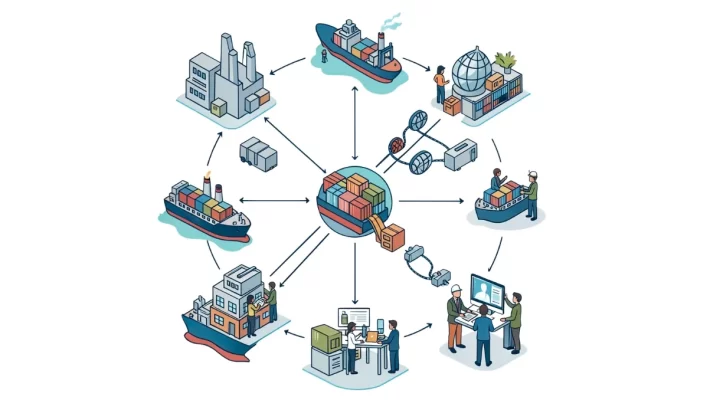
What Makes Up True Landed Cost
To understand why cheap sourcing leads to hidden expenses, it is important to examine what truly forms landed cost. The first layer is the factory price, but that figure rarely represents more than sixty per cent of the total sourcing cost. Freight charges fluctuate due to fuel prices, peak seasons, and shipping capacity. Import duties and tariff classifications vary depending on documentation accuracy. Even small misclassifications can significantly increase cost.
The next layer is quality cost. When suppliers compete aggressively on price, they often operate on thinner margins. This can affect material selection, process control, workforce training, and inspection standards.
The result is a higher quality risk. A small defect rate may appear manageable on paper, but once rework, returns, warranty claims, retailer penalties, and customer dissatisfaction are considered, the true financial impact becomes substantial.
Over time, unmanaged quality cost eliminates the perceived savings created by cheap sourcing. Compliance is another underestimated factor in global sourcing. Regulatory testing, certification, labelling requirements, and documentation accuracy are critical in international trade. Failure here does not just increase cost, it creates supply disruption.
Management overhead must also be included. Constant communication, production follow-ups, dispute resolution, and corrective action tracking consume internal resources. Time is costly. Transactional suppliers demand heavy oversight. Strategic suppliers reduce friction and improve sourcing efficiency. When freight, duties, compliance, currency exposure, and quality risk are incorporated into a structured landed cost analysis, the difference between cheap and cost-effective becomes clear.
Where Buyers Underestimate the Most
In practice, buyers most commonly underestimate quality risk and its effect on quality cost. A $0.50 saving at the factory price level can be erased by a 3-5% defect rate. Replacement shipments, emergency air freight, and retail penalties often cost more than the original savings.
Freight volatility is another underestimated variable. Many sourcing decisions are made based on current freight rates without accounting for seasonal surcharges or capacity shortages. One urgent air shipment can eliminate the benefit of months of price negotiation.
Duty misclassification is also a frequent issue in international sourcing. Incorrect HS codes increase tariffs, delay shipments, and create compliance exposure. These costs rarely appear in the initial supplier comparison. The common thread across all these factors is this: cheap sourcing ignores risk-adjusted cost. Professional global sourcing does not.
How to Calculate Landed Cost Before Selecting a Supplier
A strong landed cost calculation does not need to be overly complex, but it must be systematic. Begin with a confirmed factory price, ensuring clarity around Incoterms. EXW, FOB, and CIF are not directly comparable without adjustment.
Next, incorporate realistic freight forecasting, including contingency for rate fluctuation. Confirm accurate HS codes and calculate duties based on verified classification and origin. Then apply a conservative allowance for quality risk, informed by supplier audits, historical performance, and inspection data. Add compliance and regulatory costs specific to the destination market.
Finally, consider management overhead and currency exposure. Only when these factors are combined can a reliable landed cost be established. This disciplined approach transforms sourcing from transactional buying into strategic procurement.

Why the Lowest Factory Price Is Rarely the Lowest Cos
The supplier with the lowest factory price is often operating with higher variability, weaker compliance controls, and less structured quality systems. That variability increases quality risk, which in turn increases quality cost. A slightly higher initial quotation from a supplier with stable production processes, accurate documentation, and consistent inspection results often produces a lower overall landed cost.
In strategic global sourcing, predictability is more valuable than headline price. Margin protection depends on stability, supplier capability, and risk management, not simply on negotiating the lowest visible number.
Conclusion: Landed Cost Is the Only Number That Matters
The appeal of cheap sourcing is understandable. A lower factory price, immediate cost reduction, and visible savings on paper. But without comprehensive landed cost analysis, those savings are often temporary and misleading. When freight volatility, duty exposure, compliance requirements, currency shifts, and especially quality risk are fully accounted for, the cheapest quotation rarely remains the cheapest decision. Hidden quality cost, operational friction, and unmanaged supplier risk quietly erode margin.
In professional global sourcing, sustainable competitive advantage comes from transparency, supplier capability, and structured cost control. It comes from understanding the true total cost of ownership, not just negotiating a lower unit price. The number that protects the margin is not the one printed on the quote. It is the fully calculated, risk-adjusted, predictable landed cost. And that is where long-term profitability is secured. If you are reviewing suppliers based only on factory price, it may be time to reassess your sourcing strategy. Partner with an experienced global sourcing company that prioritises quality management, compliance control, and proactive supply risk management to protect your margin before costs escalate.
To discuss how you can reduce quality cost, control quality risk, and improve your landed cost visibility, contact ET2C International at contact@et2cint.com – to start the conversation.
Frequently Asked Questions About Cheap Sourcing and Landed Cost

Anishi Gupta
Position: Digital Marketing Specialist
Anishi Gupta is a Digital Marketing Specialist focused on performance marketing, content strategy, and data-driven growth at ET2C LinkedIn or anishi.g@et2c.com.